This post contains affiliate links. If you buy through them, Blaq Vixen Beauty may earn a small commission at no extra cost to you.
In the early ’90s, R&B glamour meant hair — lots of it, long and cascading. Then Toni Braxton arrived with a contralto that sounded like it belonged to a woman twice her size and a pixie cut you could measure in centimeters. Women didn’t ask their stylists for “a short cut.” They asked for “the Toni Braxton.” A haircut with a woman’s name on it is not a trend; it’s a title deed.
And this post can be written with receipts, because Toni told the story herself. In her memoir she walks through the exact afternoon her look was built — who held the scissors, what they did to her brows, and the one detail she had been hiding that her stylist decided to make the whole point. Then the album packaging printed the credits, album after album, the way this series wishes everybody still did.
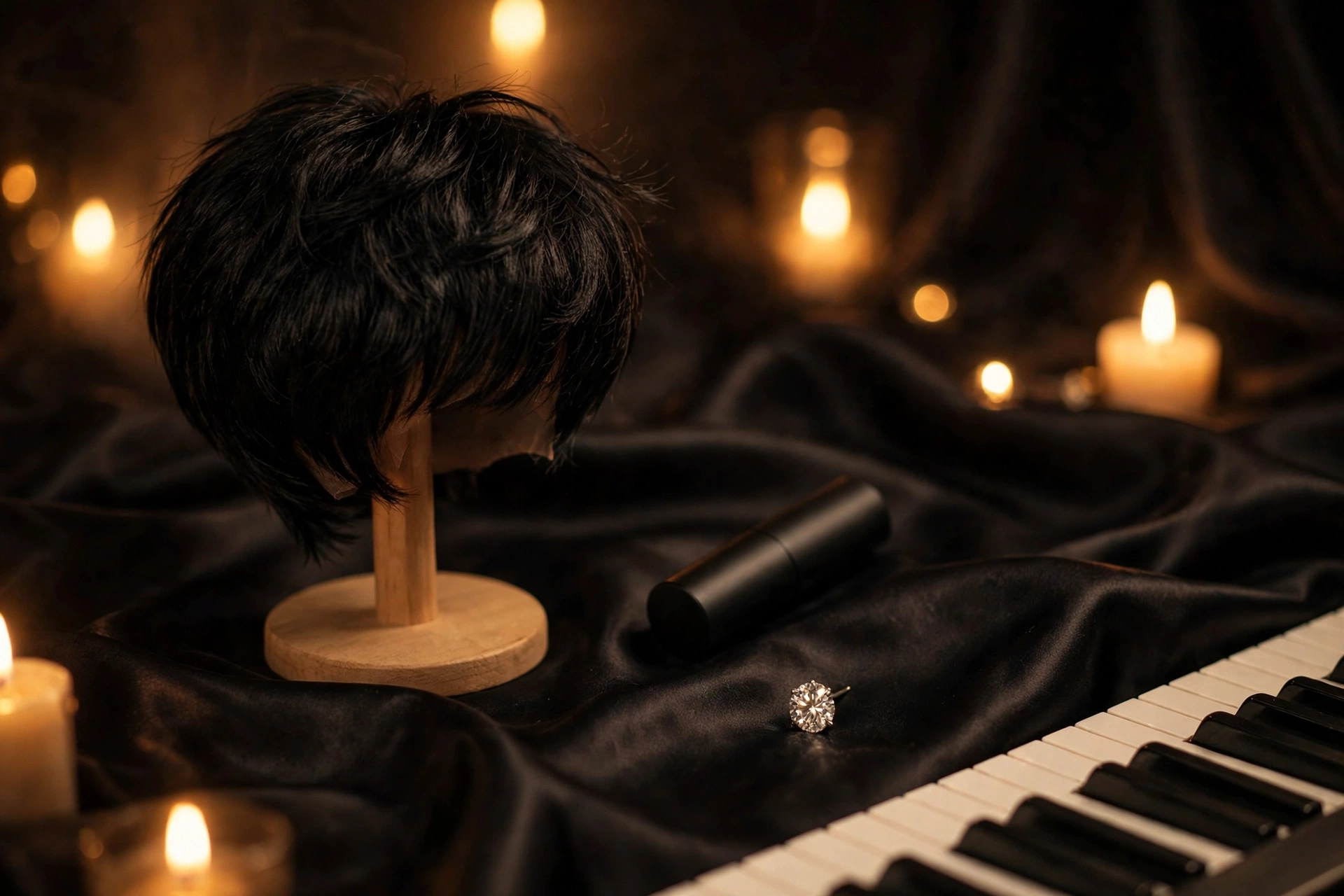
What the Record Says
From her memoir, Unbreak My Heart, on the 1992 makeover that prepared her solo launch (she had just sung “Love Shoulda Brought You Home” for the Boomerang soundtrack):
- The image had an author. Pebbles — LaFace’s own first lady — “was given the task of defining my look and updating my style.” L.A. Reid and Babyface believed in spending money to make their artists look like stars, and Pebbles ran the transformation.
- The brows were built. “I got my eyebrows tweezed and shaped. A makeup artist picked out the right foundation, lipstick, and lashes for me.” (She notes she’d worn minimal makeup until then — “it felt a little heavy to me at first.”)
- The pixie was sharpened, not invented. Hairstylist Marie Davis, of Pebbitone, was already in the room. In Toni’s words: “Marie Davis, the hairstylist, sharpened my pixie cut. I’d been bleaching my sideburns — but she told me, ‘Let’s make the sideburns work.’ She refined my cut and took me shorter, darkened my hair color, and made my sideburns really stand out.”
- The finishing school: Pebbles showed her how to pout her lips when she sang and, per the memoir, taught her to love Chanel — the logo earrings on the debut-era artwork are that lesson made visible.
Then the packaging took over as the record:
- Debut album, Toni Braxton (1993): Hair — Marie Davis. Make-Up — Billy B. Photography — Daniela Federici. Stylist — Bernard G. Jacobs. The face of “Another Sad Love Song” and “Breathe Again” has its makers printed right on the J-card.
- Secrets (1996): Hair — Carla Harrison and Marie Davis. Make-Up — Terri Apanasewicz. Photography — Randee St. Nicholas. And note the chair she took for herself: Creative Direction — Toni Braxton.
- “Un-Break My Heart” single (1996) carries the same Secrets credits. “I Don’t Want To” (1997): Hair — Marie Davis again; Make-Up — Gwynnis Mosby. One hairstylist’s name runs from the makeover chair in 1992 straight through 1997.
And ESSENCE’s retrospectives fill in how it played in public: the early-’90s crop “spawned a legion of copycats” and started the salon debate — “who’s the true originator of the fly pixie, Toni or Halle?” — that ESSENCE says is still argued today.
The Look, In Two Temperatures
Temperature one — the pixie era (1992–95). Short, dark, and precise: the cut taken shorter and deepened in color, finger-styled and tousled in the “Breathe Again” register, the sideburns standing out on purpose. With nowhere for the face to hide, the face became the whole show — brows strong and shaped (ESSENCE on the 1994 MTV VMAs: “matte red lips and strong brows… the perfect mid-Nineties siren”), lashes long (the 1994 Soul Train Music Awards paired the short hair with “striking long eyelashes and nude lipstick”), and the lip rotating through the documented shades of the moment: matte red, nude, and at the 1995 American Music Awards, “battable lashes and bronzey-brown lipstick.” By those same 1995 AMAs the cut itself was already evolving — ESSENCE’s Hairstyle File notes a slightly longer shag with flipped curls and bangs.
Temperature two — Secrets (1996–97): the long hair. ESSENCE calls it plainly: with her second album, “she also debuted a brand new, sultrier image — complete with a long, lustrous coif.” The hair went long and full — Carla Harrison joining Marie Davis in the credits — and the makeup, now Terri Apanasewicz’s on the packaging, turned to smoke: at the 1997 Billboard Music Awards, ESSENCE records “super-smokey eyes, rosy cheeks and flawlessly lined lips.” The era’s monument is the “Un-Break My Heart” video (directed by Bille Woodruff, who also directed “You’re Makin’ Me High”): long hair, mourning glamour, Toni styled — per Stereogum’s account of Woodruff’s concept — after Barbra Streisand in A Star Is Born, wailing in front of an orchestra like heartbreak was an opera.
Same woman. One era is a close-cropped profile you could recognize from across the street; the other is all length and smoke. What never changed: the brow, the lash, and a lip in the brown-red family doing quiet, expensive work.
Recreate It
Built only from what is documented above:
- The cut. A true pixie — short at the sides and back, finger-styled on top, tousled rather than shellacked in the “Breathe Again” register. And take Marie Davis’s note as law: whatever you have been bleaching, hiding, or apologizing for at the hairline — sideburns included — gets shaped and kept as part of the design.
- The brow. Strong, arched, deliberately shaped. This is the memoir’s first makeover step and ESSENCE’s first word for the 1994 face; on a close crop, the brow is the frame.
- The lip, temperature one. Matte red for the siren nights, bronzey-brown for the softer ones, nude with the lashes doing the talking for the Soul Train register — all three are documented Toni settings, not inventions.
- The lash. Long in both eras: striking and nude-lipped in 1994, battable against bronze-brown in 1995. Short hair throws all the light on the eyes; her teams knew it and spent accordingly.
- Temperature two. Length, worn full and lustrous, with the eye gone smokey and the lip kept lined and in the family — the Secrets face is smoke above, structure below.
The Ritual
Read the makeover scene again and notice its order. Before the foundation, before the lashes, there is a woman in a chair being told that the thing she had been bleaching into invisibility — her sideburns — was not a flaw to erase but a feature to sharpen. “Let’s make the sideburns work.” Every era of Toni that follows is downstream of that sentence: the pixie that showed her whole face, the brows shaped like architecture, and by Secrets, her own name in the creative-direction credit, running her own image.
That is the ritual this post leaves you with: the audit of what you’ve been hiding. Toni’s glamour didn’t start when the hair grew or the dress got daring. It started when a stylist looked at the one detail she was embarrassed by and built the signature out of it. What you were covering became the cut with your name on it.
FAQ
Who cut Toni Braxton’s famous pixie?
Hairstylist Marie Davis. In Toni’s memoir, Davis refined the cut during the 1992 LaFace makeover — taking it shorter, darkening the color, and making her sideburns stand out — and the debut album’s packaging credits Davis with hair. Her name is still in the hair credits on Secrets (1996, with Carla Harrison) and the “I Don’t Want To” single (1997).
Who did her makeup on the debut album and on Secrets?
The packaging names them: Billy B. on Toni Braxton (1993), Terri Apanasewicz on Secrets and the “Un-Break My Heart” single (1996), and Gwynnis Mosby on “I Don’t Want To” (1997). Her memoir describes the 1992 makeover’s makeup artist choosing her foundation, lipstick, and lashes but does not name that artist.
What lipstick did Toni Braxton wear?
No period source names a brand or shade for her — the honest answer is the register, not a product: ESSENCE documents matte red (1994 VMAs), nude with long lashes (1994 Soul Train Awards), and bronzey-brown (1995 AMAs). Any specific product claim would be invented, so this post makes none.
Did Beyoncé really recreate her album cover?
Yes — for Halloween 2018, Beyoncé rebuilt the 1993 “Another Sad Love Song” artwork shot for shot: pixie, white tank, leather jacket, Chanel earrings, and dubbed herself “Phoni Braxton.” Toni answered on Twitter: “How do you look better than me on MY album cover? I LOVE IT, Such a superstar!”
The Verdict
| Element | Documented source |
|---|---|
| Pebbles directed the image makeover; brows tweezed/shaped; foundation, lipstick, lashes chosen | Her memoir, Unbreak My Heart (2014) |
| Marie Davis sharpened the pixie — shorter, darker, sideburns made to stand out | Her memoir (2014) |
| Hair — Marie Davis; Make-Up — Billy B. | Toni Braxton album packaging (1993) |
| The crop “spawned a legion of copycats”; the Toni-vs.-Halle pixie debate | ESSENCE, Hairstyle File |
| Matte red lips + strong brows, 1994 MTV VMAs | ESSENCE, makeup retrospective |
| Short hair + long lashes + nude lipstick, 1994 Soul Train Music Awards | ESSENCE, iconic looks retrospective |
| Bronzey-brown lipstick + battable lashes; longer shag with flipped curls, 1995 AMAs | ESSENCE retrospectives |
| Hair — Carla Harrison & Marie Davis; Make-Up — Terri Apanasewicz; Creative Direction — Toni Braxton | Secrets packaging (1996) |
| Long, lustrous coif debuts with Secrets — “a brand new, sultrier image” | ESSENCE, Hairstyle File |
| “Un-Break My Heart” video dir. Bille Woodruff; styled after Streisand’s A Star Is Born | Video credits; Stereogum |
| Super-smokey eyes, rosy cheeks, flawlessly lined lips, 1997 Billboard Music Awards | ESSENCE, makeup retrospective |
| Beyoncé’s “Phoni Braxton” tribute to the 1993 artwork (Oct 2018) | W Magazine; Refinery29 |
Whitney’s standard was natural. Janet’s was the rebuild. Toni’s is the signature — a face so deliberately built that the culture ordered it by name, and a woman who started out in someone else’s makeover chair and ended the decade with creative direction of her own image. Short hair didn’t make her less of a siren. It made her the blueprint for a different kind.
Glamour is yours to conjure. — Lakish


