This post contains affiliate links. If you buy through them, Blaq Vixen Beauty may earn a small commission at no extra cost to you.
She took her name from a woman this site has already conjured. Foxy Brown — born Inga Marchand in Brooklyn — named herself for Pam Grier’s 1974 screen character, and then spent the late ’90s doing to designer fashion what Grier’s Foxy did to everyone who underestimated her: walked in like she owned it, because as far as she was concerned, she did.
Plenty of rappers wore labels in the ’90s. Foxy’s difference was authorship. The styling came from a named Black woman with a company built for exactly this. The hair, for a documented stretch, came from a stylist who still tells the story of their first shoot. And when the cameras rolled on her biggest late-decade video, her own name sat in the director’s credit next to the professional’s. This post is built from what those people put on the record.
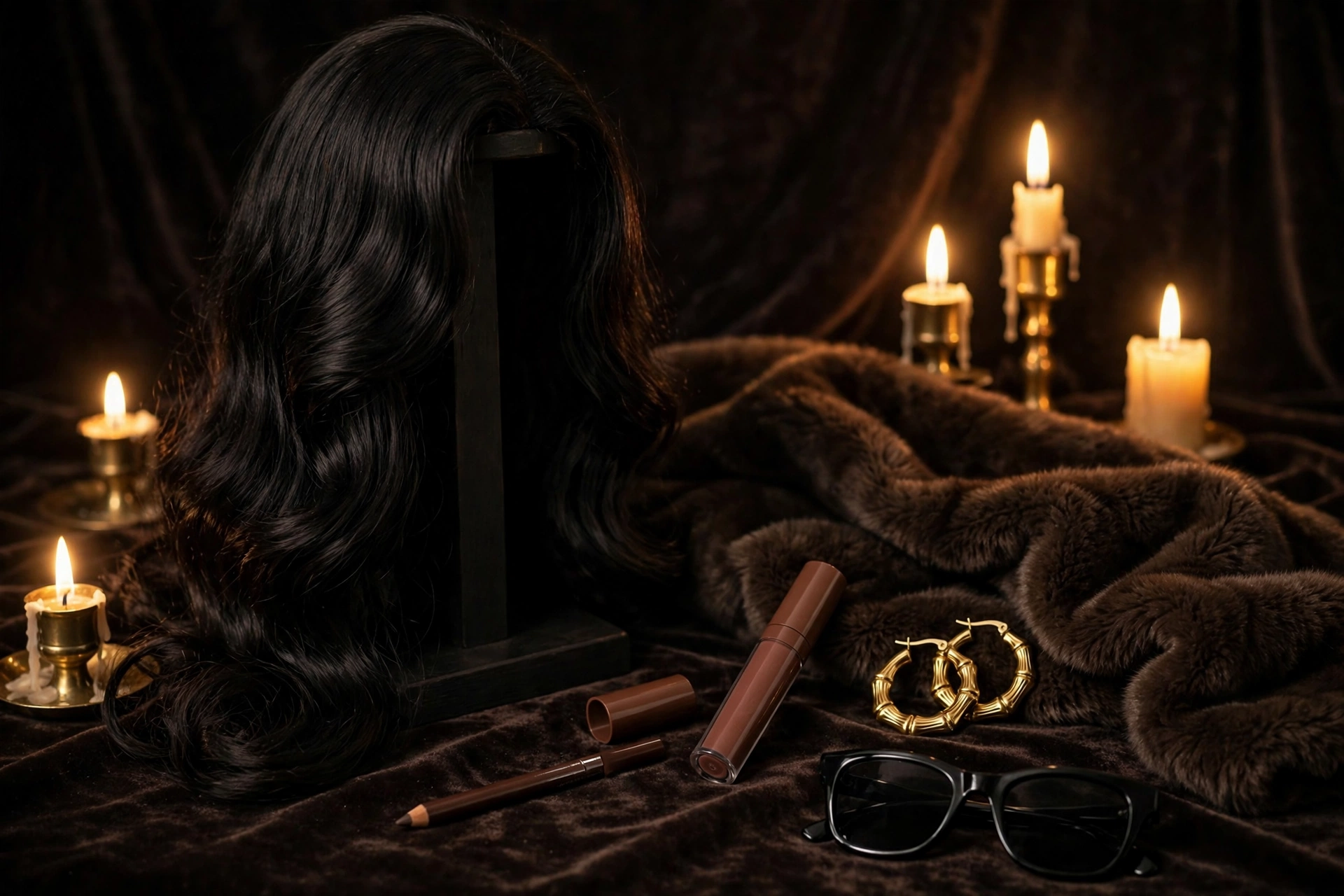
What the Record Says
- The name: her stage name is borrowed from Pam Grier’s title character in the 1974 film Foxy Brown — and the lineage closes its own circle on Chyna Doll (1999), where Pam Grier herself makes a special appearance.
- The packaging: the Ill Na Na liner notes (1996) credit photography to Michael Levine and art direction and design to Drawing Board Design. Notably, they print no makeup or hair credit at all — which is why this post names her beauty team only where interviews, not packaging, put them there.
- The styling: Misa Hylton’s company, Chyna Doll Enterprises — founded in 1995, when Hylton was 21 — styled Foxy’s videos, covers, and appearances. Hylton, in Interview Magazine, on the “I’ll Be” video (1997): the mood was “glam, high-end, but still swagged out. What was better than a gown with cutouts? That was iconic. Her skin was showing and we added a plush Mongolian fur. That took it over the top.” And on how it was sourced: high fashion doors were not open to them yet, so “most of the looks were purchased. That’s how it was.”
- The makeup chair, where it’s documented: stylist Eric Archibald, who worked the “Get Me Home” video shoot (1996, directed by Hype Williams), recounts that Sam Fine did Foxy’s makeup that day. The same account records her authorship of the casting: she insisted the video’s women be all Black and dark-skinned — her “chocolate girlfriends,” in Archibald’s retelling.
- The hair: Tippi Shorter, in her own words to Black Enterprise and Curly Nikki: Foxy was her first celebrity magazine client — an ESSENCE cover shoot where the magazine wanted to give Foxy a new look — and “she continued to work with me for about a year afterwards.” Shorter’s signature, her phrase, is “big, sexy, healthy hair.”
- The lip: Reflect Beauty’s history of the dark-liner trend credits Foxy as the first to wear metallic pink lipstick with black lip liner — the deep ring of liner around a lighter, gleaming center that a generation of Black and Latina girls made their own.
- The director’s credit: the “Hot Spot” video (November 16, 1998) is directed by Joseph Kahn and Foxy Brown. Set in a frozen, ice-themed nightclub, it put her in a metal-plated bikini — an image so era-defining that MTV parodied it in its 1999 Hip Hop Week campaign.
- The chart receipt: Chyna Doll, released January 26, 1999, was the first solo female rap album to debut at No. 1 on the Billboard 200.
The Look, In Two Temperatures
Temperature one — Ill Na Na (1996–97): the don diva. The debut cover is the thesis: black leather and sheer, a direct stare, a teenager photographed like a mob wife who also happens to be the mob. The face around it: the dark-lined lip — black or deep-brown liner worn unblended as a frame, the center filled lighter and metallic — and long, dark, waved hair with the volume Shorter built her name on. The wardrobe grammar was Hylton’s high-versus-low: a cutout gown under a plush Mongolian fur, street posture in couture pieces, most of it bought outright because borrowing wasn’t offered. Ebony’s retrospective names the fantasy exactly: “dark-skinned, Brooklyn, West Indian, luxurious and entirely aware of her own beauty.”
Temperature two — Chyna Doll (1998–99): the ice doll. By the decade’s end the warmth goes glacial. The “Hot Spot” video freezes the nightclub and plates her in metal; i-D describes the era’s Foxy style as “slinky and glitzy with a minimalist edge,” a fan of “metal mesh, bright satin, and mink,” always with a ’70s undertow — the Grier inheritance showing through the space age. The Chyna Doll cover strips everything back: a feathered bikini against a white void, the body as the entire set. And underneath the polish, the authorship deepens — her name beside Kahn’s in the director’s credit, her pen across the album. The doll, it turns out, was pulling her own strings.
Same woman. First she dressed like the boss’s wife in a mafia film; then she dressed like the future and directed it herself.
Recreate It
Built only from what is documented above:
- The lip is the architecture. Deep liner — black or darkest brown — drawn as a visible frame, not blended away, with a lighter metallic pink filled into the center. That contrast is the documented Foxy signature; softening it into a nude ombré is a different decade’s idea.
- Skin, kept like skin. The era’s Foxy face was never a mask — features highlighted, base flawless but believable. The glamour lived in the lip, the hair, and the clothes, not in a heavier face.
- Hair, big and waved. Long dark waves with volume — the “big, sexy, healthy hair” register Shorter describes as her signature, and the shape the Ill Na Na cover made famous.
- Wardrobe, temperature one. The Hylton formula: one high-glam piece with skin in it — a cutout gown — finished with something plush over the top. Fur (faux reads the same in photos) is the documented exclamation point.
- Wardrobe, temperature two. Metal mesh, bright satin, or a metallic finish, kept slinky and minimal everywhere else. Ice, not clutter.
- The finish. Hoops and iced jewelry are welcome, but the real finish is the credit line: your look, your call. She bought hers when they wouldn’t lend them. Wear yours like that.
The Ritual
Read Hylton’s account again: the doors of high fashion were closed, so they bought the clothes. Read Archibald’s: the casting was hers, down to who got to be beautiful on camera. Read the “Hot Spot” credits: director — Joseph Kahn and Foxy Brown. Every document this post is built on is, underneath the glamour, a record of a young Black woman refusing to be a mannequin in somebody else’s image.
And she did it wearing a foremother’s name. To take Pam Grier’s character as your own name is to put on a mantle — beauty as weapon, beauty as armor, beauty that kicks the door instead of knocking. That is the ritual this post leaves you with: inherit deliberately, then author completely. The name can be borrowed. The image must be yours.
FAQ
Who styled Foxy Brown in the ’90s?
Misa Hylton and her company, Chyna Doll Enterprises, which styled Foxy’s videos, magazine covers, and public appearances. Hylton describes the “I’ll Be” look herself in Interview Magazine: a cutout gown with a plush Mongolian fur, “glam, high-end, but still swagged out.”
Who did Foxy Brown’s hair?
Hairstylist Tippi Shorter, by her own account in Black Enterprise and Curly Nikki interviews: Foxy was her first celebrity magazine client, for an ESSENCE cover shoot, and kept working with her for about a year. Shorter’s signature is “big, sexy, healthy hair.”
Who did Foxy Brown’s makeup?
Where it’s documented: Sam Fine, on the “Get Me Home” video shoot (1996), per stylist Eric Archibald, who worked that shoot. The Ill Na Na packaging prints no makeup credit, and no standing makeup artist for the era is documented — so this post names the chair only where a participant put it on the record.
Where does the name Foxy Brown come from?
Pam Grier’s title character in the 1974 film Foxy Brown. Grier herself appears on Chyna Doll (1999).
Did Foxy Brown really co-direct “Hot Spot”?
Yes — the video (November 16, 1998) is credited to Joseph Kahn and Foxy Brown. Its frozen-nightclub, metal-bikini image was later parodied by MTV’s 1999 Hip Hop Week campaign.
The Verdict
| Element | Documented source |
|---|---|
| Stage name from Pam Grier’s 1974 character; Grier appears on Chyna Doll | Encyclopedia.com biography; Chyna Doll album record |
| Ill Na Na photography — Michael Levine; art direction — Drawing Board Design; no makeup/hair credit printed | Ill Na Na liner notes |
| Styling by Misa Hylton / Chyna Doll Enterprises; “I’ll Be” gown + Mongolian fur; looks purchased, not borrowed | Hylton in Interview Magazine; company record |
| Makeup by Sam Fine on the “Get Me Home” shoot; her all-Black, dark-skinned casting | Eric Archibald, Stories In Style podcast account |
| Hair by Tippi Shorter — ESSENCE cover, then about a year | Shorter in Black Enterprise / Curly Nikki interviews |
| First to wear metallic pink lipstick with black lip liner | Reflect Beauty, dark-liner trend history |
| “Hot Spot” co-directed by Kahn and Brown; metal-plated bikini, ice nightclub; MTV parody | Video credits; i-D retrospective |
| Chyna Doll — first solo female rap album to debut at No. 1, Billboard 200 | Billboard/Guinness record, 1999 |
Whitney’s standard was natural, Janet’s was the rebuild, Kim’s was the wig as wardrobe. Foxy’s is ownership: the gown bought outright, the cast chosen by her hand, her name in the director’s credit — luxury not as something lent to her, but as something she held the receipts for.
Glamour is yours to conjure. — Lakish

