This post contains affiliate links. If you buy through them, Blaq Vixen Beauty may earn a small commission at no extra cost to you.
Somewhere in your childhood bathroom cabinet, there was a jar. You know the one — blue-green grease, that clean old-school smell, a lid that never quite went back on straight. Your mama used it. Your grandmama used it. A fingertip of it could lay down flyaways, shine up a press, and send you out the door looking like somebody loved you.
Then we grew up, went natural, and got preached at. Grease was the villain. Petrolatum was a curse word. We built twelve-step routines with products we couldn’t pronounce, leave-ins layered on leave-ins, and a whole internet telling us the jar our grandmothers swore by was holding our hair back.
Well. The girls are going back to the jar.
Lately the conversation everywhere — and I mean everywhere, hundreds of comments deep — is women returning to Blue Magic like they never left. Not ironically. Not for nostalgia alone. Because it works, it costs almost nothing compared to a cart full of boutique products, and because some of us are tired. Tired of routines that take an hour. Tired of hair that’s moisturized on wash day and thirsty by Wednesday. The jar was sitting there the whole time, patient as ever.
A Little History in the Jar
Blue Magic isn’t new, and it isn’t a trend — it’s an institution. J. Strickland & Co., the Memphis-born company behind it, has been making Black hair care staples since 1936 — the same house behind Sulfur 8 and Worlds of Curls. The Blue Magic line itself started in 1968 with a pressing oil, made for the press-and-curl era. The Conditioner Hair Dress — the original in the blue-green jar — and the Bergamot conditioner followed in 1974. The Coconut Oil version came along after, and between the three of them, they’ve dressed a few generations of our hair.
Look at the ingredient list on the original and you’ll see why the natural-hair era side-eyed it: petrolatum, lanolin, mineral oil. That’s the whole formula, basically. No botanical extracts with poetry in the name. Just grease, the way grease has always been.
Why It’s Working for Women Again
Here’s what the revival understands that the anti-grease years forgot: grease doesn’t moisturize. It seals. That’s not a flaw — that’s the job description.
Water and your leave-in do the moisturizing. The grease locks it in so it can’t escape. On hair that loses moisture fast — and a lot of our hair does, especially the ends, especially in winter, especially under wigs and braids — a good seal is the difference between a style that lasts the week and one that gives up by Tuesday. That’s why our grandmothers’ hair routines were so short. Wash, condition, grease, braid. Done. The shine everybody’s posting about? That’s the seal doing its work.
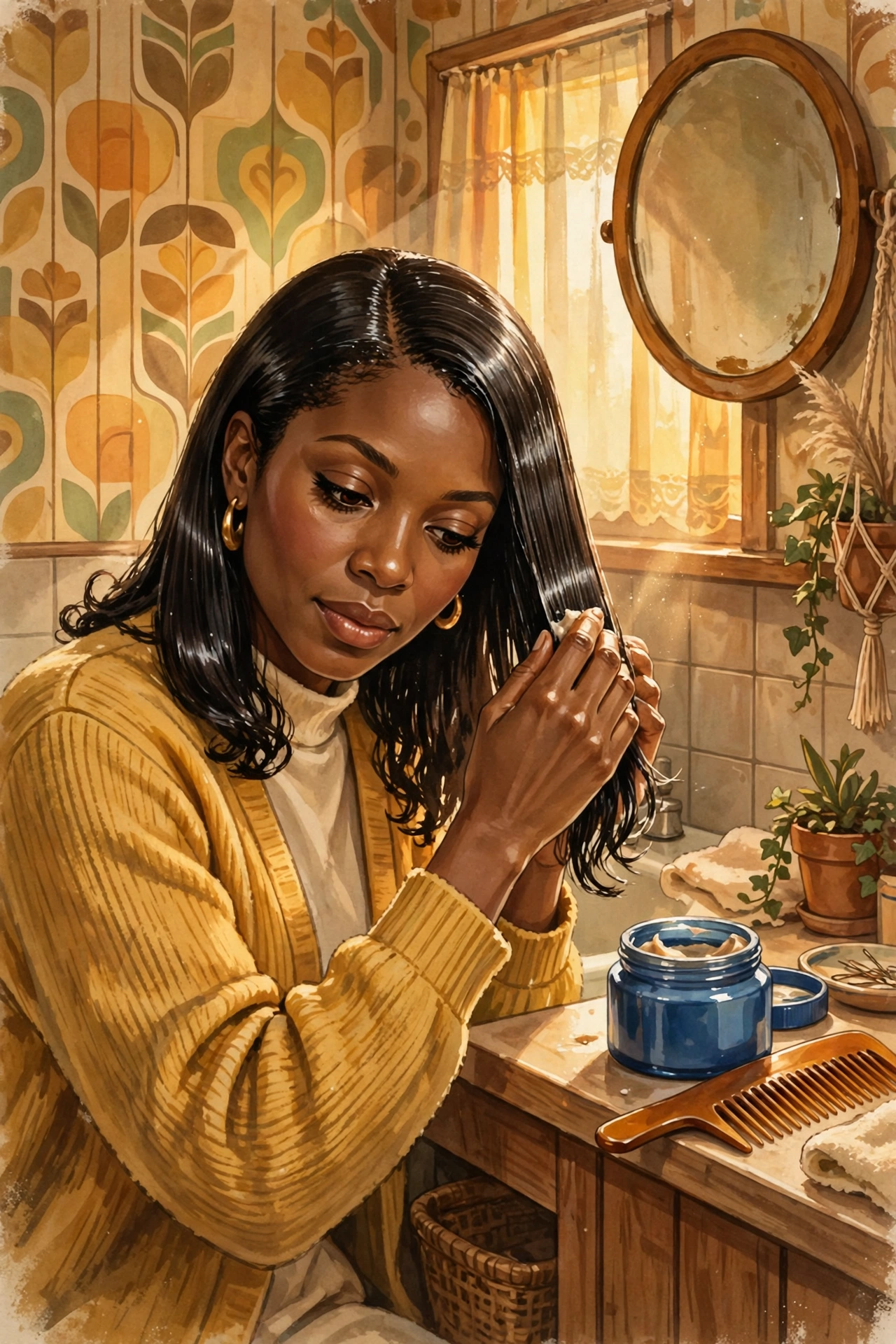
There’s a scalp ritual to it too. Parting the hair row by row, working a little grease in with your fingertips — women are describing it like meditation, and I get it. It’s slow. It’s hands-on. It’s the opposite of spraying something on and running out the door.
The Honest Part
Now let me be straight with you, because I always am. Grease has real downsides, and the revival girls will tell you the same:
- It builds up. Petrolatum doesn’t rinse out with a gentle co-wash. If you’re greasing regularly, you need a real clarifying wash in the rotation, or you’ll end up with coated, dull hair that won’t take moisture at all.
- A little is the whole point. The heavy hand is what gave grease its bad reputation. Warm a small amount between your palms. If your hair looks wet, you used too much.
- It goes on damp hair, not dry. Grease on dry hair just seals the dryness in. Mist it, leave-in first if that’s your way, then seal — ends first, because your ends are the oldest, thirstiest part of your hair.
- Keep it off a dirty scalp. Grease over flakes and buildup is a trap. Start clean.
How I’m Using It
Damp hair, after washing. A fingertip’s worth, melted in my palms, pressed into the ends and worked up — never glopped at the roots. A light pass over the scalp only when it’s clean and dry-feeling. Then braids, twists, or a press, and I leave it alone. That’s the part nobody believes: the routine is short. The jar asks for ten minutes and gives you back the rest of your week.
Maybe that’s the real revival. Not the grease itself — the simplicity. Our grandmothers weren’t doing twelve steps. They were doing three, with intention, with their hands, with what they had. The jar on the counter isn’t a step backward. It’s a reminder that Black hair was being cared for, beautifully, long before the routine got complicated.
Stay true to the vixen in you. — Lakish