
Before anything is declared at this altar, the declaration itself is laid where every working here is laid: before our benevolent ancestors, consulted first, ahead of every book, every current, and every name in what follows. They are the first authority over this inheritance — because they are the ones who left it.
I. The Thesis
Glamour work is Black American heritage and inheritance.
Heritage is what a people makes under pressure. Inheritance is what is handed down with names attached — received, not adopted; kept, not consumed. This altar does not borrow its glamour, does not rent it from a trend cycle, and did not learn it from the market. It descends through Black American hands, and it is held here the way an inheritance is held: in trust, with the dead named and the duties kept.
II. The Transmission Lines
An inheritance has carriers. This one has never traveled without them.
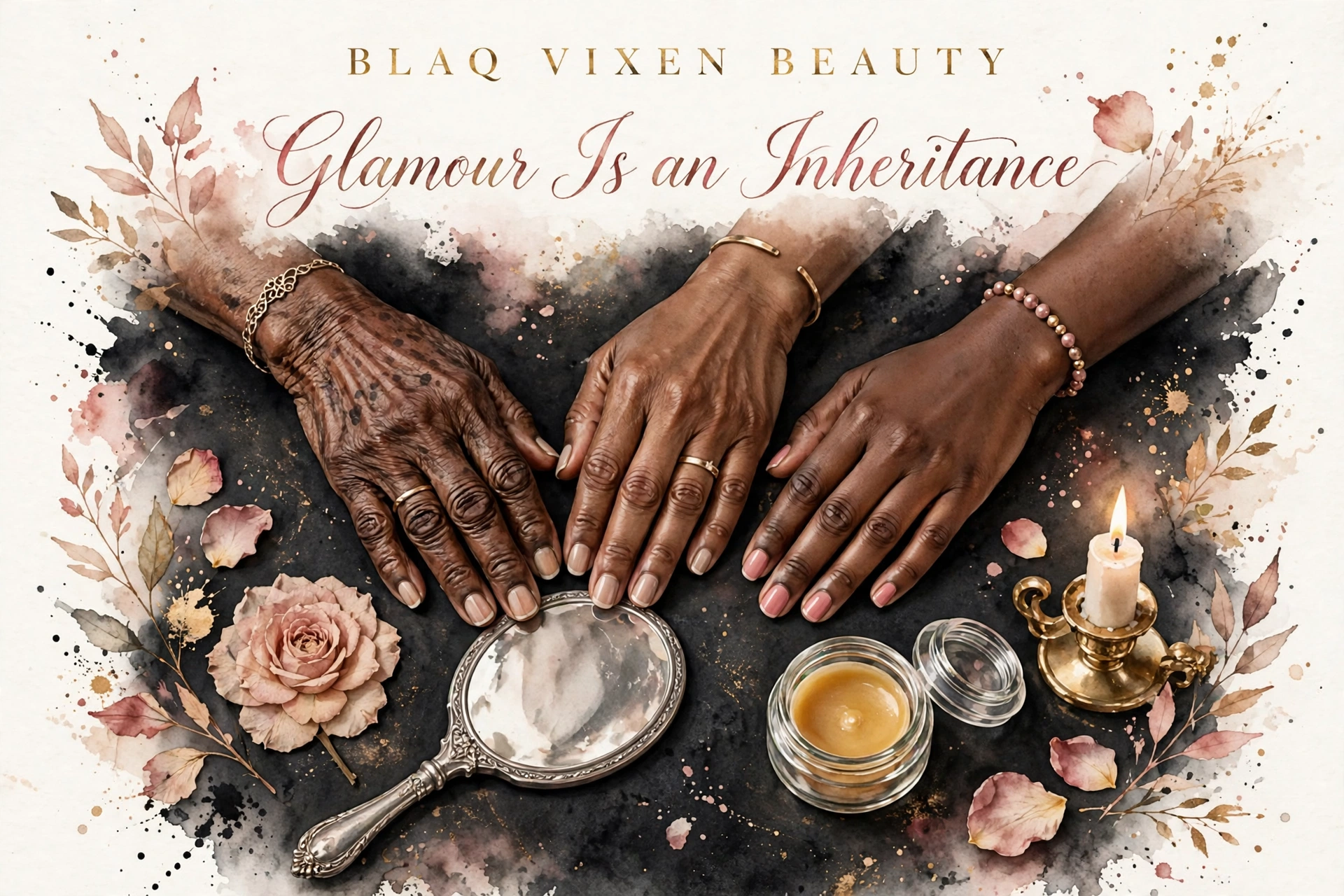
It traveled the road — worked for survival by people who changed what the world saw when it looked at them, and lived because the seeing changed: the disguise, the veil, the governed face, glamour in its oldest American office.
It traveled the mirror — through Paschal Beverly Randolph, the free-born Black seer who taught that sight is a birthright and the will stays awake before the glass, and whose Seership reached this altar’s keeper in 2018 through the hands of a living teacher, LisaKay Jones of Memphis Conjure, in the old way: hand to hand, with the warning that it was not for everybody.
It traveled the succession — Madam C. J. Walker’s line, carried mother to daughter to granddaughter; Annie Malone’s Poro, which taught an industry; Marjory Joyner’s schools, which put the craft into thousands of hands and the hands into shops of their own. Beauty culture in Black America was not an industry that admitted our grandmothers. It was an inheritance our grandmothers built, and then handed down.
It traveled the shops — the counters and kitchens and conjure stores where the record was kept when no one else would keep it, where a girl could learn what her face was for and what her hands could hold.
Every line ends the same way: at a living woman’s vanity, where the inheritance is received again.
III. What Inheritance Is Not
It is not an aesthetic. An aesthetic can be adopted for a season and set down when the season turns; an inheritance cannot be set down, because it was never picked up — it was given, and it carries its givers with it.
It is not a trend. The market discovers this glamour in cycles and forgets it in cycles. The inheritance does not notice the cycles. It was here before the discovery and it keeps its hours after the forgetting.
And it is not a costume. What is taken without the names, without the dead, without the duties — the shine lifted and the lineage left — is not inheritance. It is appropriation, and this altar names it plainly and without heat: the difference is not the taking. It is the leaving.
This house is not a gate slammed. It is a house with a door, and a way of entering: come as a student, name your sources, seat the ancestors before the icons, and learn the workings by their true names. The inheritance welcomes the keeper. It does not recognize the costume.
IV. The Keeper’s Duties
To receive an inheritance is to owe. This altar keeps five duties, and states them as law:
Name your sources. Every teacher, every text, every hand the work passed through. An inheritance with its names filed off is already half stolen.
Consult your benevolent ancestors first. Before any spirit, any icon, any working. They are the first court of this house, and there is no appeal above them.
Correct the record when it errs. This altar has done it in print — a famous deck’s painter honored for her true artistry and refused a bloodline the record does not hold, because we do not borrow ancestors; we seat our own. The inheritance is kept accurately or it is not kept.
Name the workings truly. Glamour is perception work — being seen, being unseen, fascination, warding, command. Beauty magic is the work whose object is beauty itself. Vanity magic is adornment for regard and pleasure, and it is named without shame. Foundational work is called by its own name. An inheritance mislabeled is an inheritance already being lost.
Teach it forward. In season, to those who will keep it. What is hoarded dies with the keeper. What is taught, with its names attached, outlives her.
V. The Charge
So this is the standing word of this altar, set down where it can be found:
If you have received this glamour, you hold it in trust — for the women who carried it through the road and the mirror and the shops to reach your hands, and for the women whose hands it must reach from yours.
Spend attention like an offering. Keep the names on the work. Correct the record, name the workings truly, and teach it forward.
The glamour was never ours to invent. It is ours to keep.
Glamour is yours to conjure. — Lakish