This post contains affiliate links. If you buy through them, Blaq Vixen Beauty may earn a small commission at no extra cost to you.
A glamour begins before it is seen.
Before the face, before the dress, before the first word — scent enters the room ahead of the woman, and it is still there, settled into the curtains and the cushions, after she has gone. Every other element of glamour works on the eye. Incense works on the air, and the air is the room’s first opinion. This piece teaches the dressing of it.
But the first smoke raised in this house is not atmosphere. It is offering. Before any working at this altar — before the burner is lit for any purpose of beauty — consult your benevolent ancestors first, and let the first fragrance rise for them. They are the first authority, before any root, any book, any resin. Incense was an offering for millennia before it was ever a mood; the altar keeps that order, and the room is dressed only after the ancestors have been served.
The Church Record
Incense’s oldest address in our record is the sanctuary.
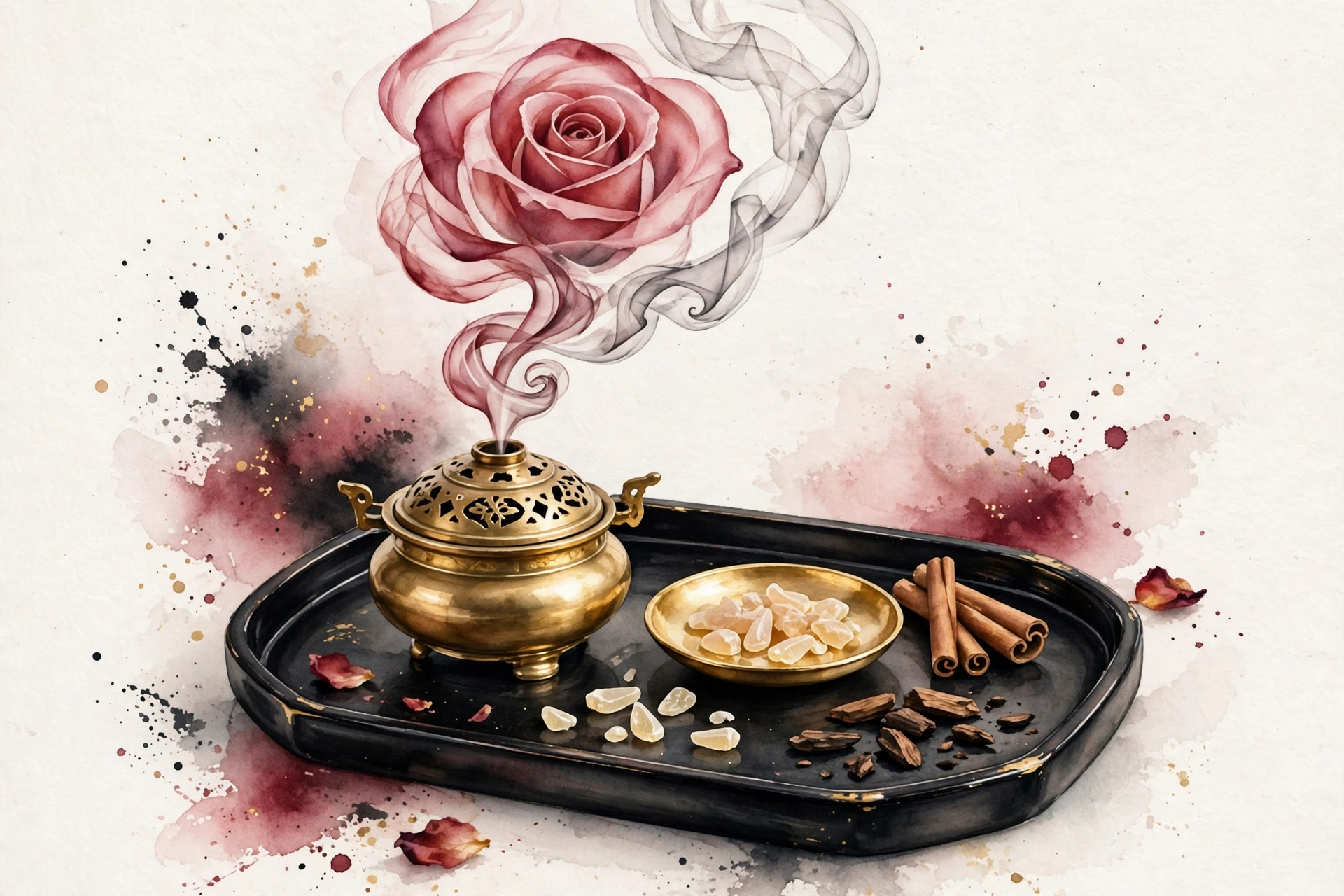
Frankincense and myrrh arrive in the Bible the tradition carries as gifts fit for a king and substances fit for the altar — the smoke of reverence, rising as prayer made visible. In Black church life, that smoke’s meaning survived even where the thurible itself did not hang: the sanctuary dressed for holiness, the air of the house of God treated as part of the worship, a people who understood that a room can be prepared to receive what is sacred. The Glamour Cabinet keeps frankincense under a plain description: regarded with reverence. It begins here — a resin burned where reverence is required, its smoke the visible form of regard ascending.
The Conjure Record
The conjure record keeps incense in working clothes.
In the testimony gathered in Harry Middleton Hyatt’s interview volumes, and in Zora Neale Hurston’s Mules and Men, incense appears as the record’s own witnesses describe it: burned for conditions, for rooms, for persons — smoke applied the way every element of a working is applied, deliberately and for a named purpose. Katrina Hazzard-Donald’s Mojo Workin’ documents the system those witnesses practiced: an African American religious technology in which the dressing of a space was never an afterthought, because the space was part of the working.
Honesty requires one shelf-mark here. Some of what the modern seeker meets as “condition incense” comes down through the twentieth century’s formulary documentation rather than through elder testimony — printed blends, catalogued powders, a commerce of correspondences. This altar shelves that material as what it is: modern documentation, useful as record of what was sold and said, never dressed as the voice of the grandmothers. The elders speak in the interviews. The catalogues speak for themselves. Keep the shelves separate and both stay honest.
Bakhoor: The Bridge
And then there is the bridge — the living practice that joins this altar to the Arabian perfumery this house loves.
Bakhoor is oud wood, chips of the agarwood tree, perfumed with oils and burned in a censer called a mabkhara. In the majlis tradition of the Arabian Peninsula, the burner is not left in a corner: it is carried — passed to the guest as an honor, held so the smoke rises into hair and garments, so the visitor is perfumed by the house itself before a word of welcome needs saying. The scent settles. It stays in the cloth. The guest carries the room home with her.
Hold that against the thesis of this piece and the bridge is plain: here is an entire culture’s hospitality built on the doctrine that the air is dressed first, that scent is an authoring of atmosphere, that a person can be received by a fragrance before she is received by a face. The scents piece in The Enchanted Vanity takes the same oud onto the skin — oil on the pulse points, scent worn like jewelry. Bakhoor is its twin on the air. Same tree, two houses of glamour, and the smoke is the door between them.
The Cabinet, Burned
The Glamour Cabinet keeps a burned shelf, and its double citizens deserve their names — every one of them given here as the tradition’s reputation, labeled as reputation and nothing more:
Frankincense, regarded with reverence, from the sanctuary to the altar. Sandalwood, the contemplative’s wood, burned where calm authority is the atmosphere being authored. Amber resin, warmth itself, the golden register of a room. Cinnamon, heat and drawing, the spice of the sweetened welcome. And damiana, filed to this shelf by this house’s own direction — an herb of the love-and-attraction reputation in the folk record, present here as folklore and reputation only. This altar files damiana the way it files every such claim: as what is said of her, never as what is proven of her.
No blends are invented on this page. No smoke on this page is medicine, and this altar claims nothing for it — not for lungs, not for mood as treatment, not for the body at all. The record says what was burned and why the burners said they burned it. That is the whole of the evidence, and it is enough.
Dress the Room First
Church, conjure house, majlis — three houses, three records, one grammar: the air is a surface, and it can be dressed.
Name the work truly, as this altar names all its work. The incense is a means, and means take their names from their ends. Smoke raised for the ancestors is an offering — beauty magic, devotion with a fragrance. Smoke raised to author what the room perceives before the woman enters, the air carrying her instructions ahead of her, is glamour proper: perception worked on the room itself. And smoke raised only because a room should smell lovely for the woman who lives in it is vanity’s honest register — pleasure in one’s own air. Same burner, three names. The altar keeps them separate so the worker always knows which work she is doing.
So dress it first. Raise the smoke for the ancestors, and then raise it for the room: the burner carried, the fragrance settled into the soft furnishings of your life, the atmosphere authored before the author appears. The woman who dresses her air is never merely entering a space. The space has already received her instructions — and when she steps into it, she steps into a room that was expecting her.
Glamour is yours to conjure. — Lakish
From the Altar’s Bookshelf
- Zora Neale Hurston, Mules and Men (1935)
- Katrina Hazzard-Donald, Mojo Workin’: The Old African American Hoodoo System (2013)
As an Amazon Associate, Blaq Vixen Beauty earns from qualifying purchases.