This post contains affiliate links. If you buy through them, Blaq Vixen Beauty may earn a small commission at no extra cost to you.
The hook
Diana Ross did her own face.
Before Motown, before The Supremes, before the solo career and the films, she enrolled in cosmetology school as a teenager — and she never stopped doing her own hair and makeup. Her daughter Tracee Ellis Ross has said it plainly: “My mom does all her own hair and make-up, and always has. Eyelashes, the whole deal — she does it herself.”
That is the whole lesson of this look: nobody handed Diana Ross her glamour. She learned the craft, picked up the lashes herself, and built the face that became the Boss — one false lash at a time.
Why Diana, and why now
Josephine Baker was Spellbook Looks No. 01 — Paris-stage drama. Dorothy Dandridge was No. 02 — Hollywood precision. Diana is No. 03 because she is the bridge between them and the disco floor: the Supremes’ coiffed ’60s glamour, the solo ’70s reinvention, and the lashes that never left.
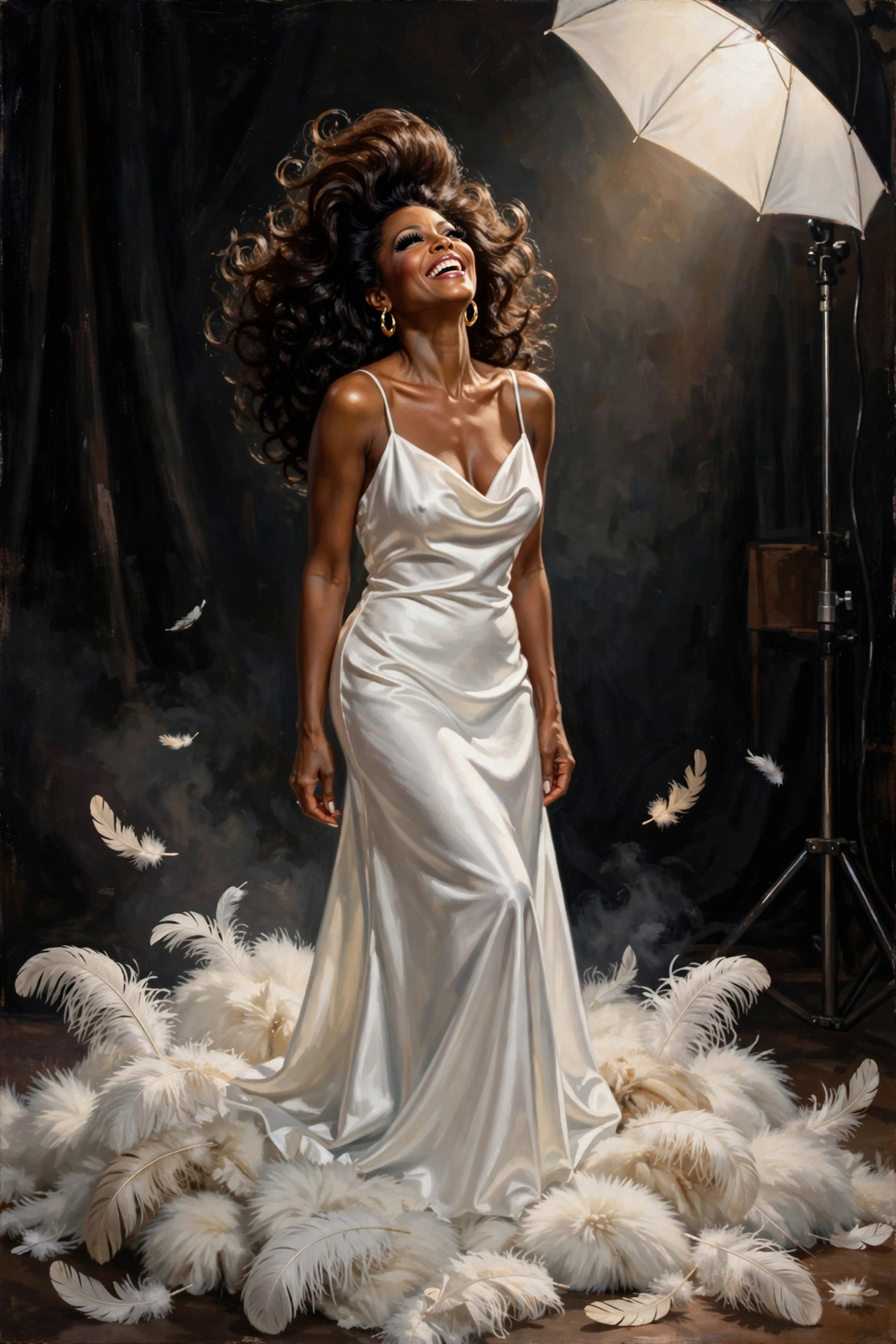
Her signature, as the photographs and the film stills show it:
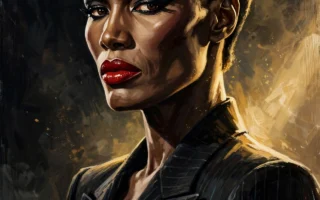
- The lashes — upper and lower. Multiple layers of voluminous, full falsies, plus lashings of black mascara. In the iconic 1975 shoot, she wore faux lashes on her upper and lower lash lines — and purposefully left the inner corners free of lashes, which opened the eye up and made the whole thing read doe-eyed rather than heavy.
- A thin, angled brow. Who What Wear’s ’70s roundup frames the 1975 eye with “a thin, angled brow” — the frame that lets the lashes do the talking.
- Blue-gray shadow, or a wash of colour. In 1973, promoting Lady Sings the Blues in London, she wore feathered false lashes with a wash of blue-gray shadow. In Mahogany (1975), her eyes are framed with dark shadow and liner throughout, while the promotional images lean into lighter pastel shadow.
- The lip that changes with the era. Frosty lipstick in the 1975 studio shots; glazed red lips with the windswept blowouts of the late ’70s; a matte red lip at her Super Bowl XXX halftime performance, paired with sheer pink looks and her signature voluminous hair.
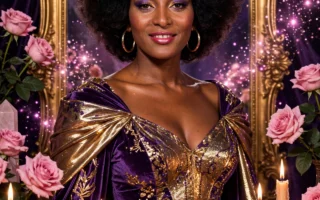
- The hair — always bigger. The teased bouffant and chin-grazing bob of the Supremes years, the cloud of natural curls when she went solo in 1970, the extra-large afro of 1975, the brushed-out waves of the disco era. The hair is never an afterthought; it is half the look.
This post is a wearable modern interpretation of that face — not a claim about the products she herself used. Diana did her own makeup, but no one should pretend a modern mascara is a 1975 one, and no Hoodoo practice is attributed to Diana here. The ritual in this post is Lakish’s own: the mirror work, the choosing, the walking-in as the Boss.
The look, element by element
1. The lashes — the whole look lives here
Diana’s lashes are the first thing to get right, because everything else is built around them. This is a falsies look, not a mascara-only look — but the falsies are placed with intent, not just piled on.
- Choose a full, voluminous pair for the upper lash line — not too long for your eye shape. Trim to fit before the glue goes anywhere near your eye.
- Press the band down with the flat side of tweezers while the glue dries, so it sets and secures — the Zoe Report’s tip, and the difference between lashes that sit and lashes that lift at the corners.
- Add lower lashes too, or draw the lower-lash drama with liner and mascara if full lower falsies feel like too much on your eye shape. The key Diana detail: leave the inner corners free of lashes. That open inner corner is what makes the eye read wide and doe-like instead of closed in.
- Finish with black mascara — length-boosting and defining, one that won’t clump or flake. Who What Wear’s pick for this eye is Clinique High Impact Mascara — cited as the article’s pick.
2. The brow — thin, angled, out of the lashes’ way
Diana’s brow in the ’70s is thin and angled — a frame, not a feature competing with the lashes.
- Map a clean, angled arch — higher and more defined than a soft natural brow, but still following your own bone structure.
- Fill lightly, with short strokes, and set so it holds. Who What Wear’s pick for this brow is Lawless Hold Up Soft Set Creamy Brow — cited as the article’s pick.
3. The shadow — blue-gray wash, or pastel, or dark
Diana’s shadow changes with the moment, and this post keeps all three versions, because the choice is yours to make in your own light.
Version A — the blue-gray wash (1973). A wash of blue-gray shadow over the lid, feathered out — the London promo look, bridging go-go and disco.
Version B — the dark frame (Mahogany, 1975). Dark shadow and liner framing the eye through the film — the most dramatic of the three, and the one that makes the lashes read even bigger.
Version C — the pastel promo. Lighter pastel shadow from the Mahogany promotional images — softer, and the most wearable in daylight.
- Blend the shadow out, not up to the brow — the colour sits on the lid and fades at the crease.
- Keep the lid quiet under Version B: the dark shadow is the statement, so the liner stays close to the lash line.
4. The lip — frosty, glazed red, or pale pink
Diana’s lip is the dial you turn to set the era. Three versions, one decision.
Version A — the frosty lip (1975 studio). The frosty lipstick from the iconic 1975 shoot — pale, light-catching, pure disco drama.
Version B — the glazed red. The glazed red lips she paired with windswept blowouts in the late ’70s, and the matte red of the Super Bowl XXX halftime show. The reds: MAC Ruby Woo, Fenty Uncensored, and the MAC Nightmoth liner + bright red ombré — the three reds from our Perfect Black Girl Red breakdown.
Version C — the pale pink. The Zoe Report’s Diana look pairs the big lashes with a pale pink lip — almost-white, opaque pink — so the eyes stay the whole story and the lip doesn’t compete with the hair.
- Line first, in a shade matching the lipstick, to define the shape and stop the colour running.
- For the frosty and pale-pink versions, the lip is the quiet part of the face — one layer, blotted, no gloss war with the lashes.
- For the glazed red, add the gloss or a sheer centre highlight only — the lip should shine, not swallow the face.
5. The base — glowy, not matte
Where Dorothy’s base was matte-leaning and set, Diana’s is glowy. The Zoe Report’s Diana look starts with a light liquid foundation blended with a sponge, then an illuminating powder dusted along the cheekbones, temples and forehead — and a dab of gloss along the cheekbones and eyelids for a healthy shine.
- Set lightly so the glow survives; don’t powder away the highlight on the cheekbones.
6. The hair — volume is the point
Diana’s hair is never small. The Supremes’ teased bouffant, the solo-era cloud of curls, the extra-large 1975 afro, the brushed-out disco waves — the point in every era is volume, finished on purpose.
- For a wearable modern version: small, defined curls, brushed out with a fine natural-bristle brush, under-sections teased for lift, finished with a flexible-hold spray — the Zoe Report’s method for the brushed-out waves.
The exact recreation list
The cited picks behind this recreation — named by the published breakdowns this post draws on, cited as their picks, not presented as products Diana herself used:
- Clinique High Impact Mascara — Who What Wear’s pick for this eye
- Lawless Hold Up Soft Set Creamy Brow — Who What Wear’s pick for this brow
- MAC Retro Matte Lipstick in Ruby Woo — Version B red
- Fenty Beauty Stunna Lip Paint in Uncensored — Version B red
- MAC Lip Pencil in Nightmoth — Version B ombré liner
- Full, voluminous false lashes for the upper lash line, with lower lashes or lower-lash liner — inner corners left free
The 5-step Spell
This is Lakish’s ritual, not Diana’s — a modern mirror working built on Diana’s lesson: learn the craft yourself, and no one can take the face away from you.
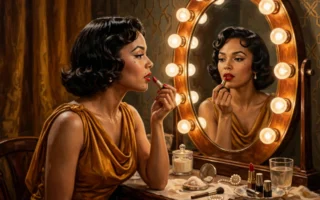
- The lashes, first. Sit at the vanity, mirror split if you like — you on one side, Diana on the other. Trim, glue, press, set. This is the craft; a steady hand here steadies everything after it. Say it plainly: I do my own face. I always have.
- The brow. One clean, angled line — the frame, not the fight. As you draw it: I frame my own gaze.
- The shadow. Choose — blue-gray, dark, or pastel — in your own light, on your own lids. Blend it out, don’t force it up. I choose the era I’m walking into.
- The lip. Choose — frosty, glazed red, or pale pink — and let the lashes stay the star. Line it, fill it, blot it. This is the decision Diana made every night before the stage: The eyes are the entrance. The lip is the exit line.
- The hair, big. Brush it out, tease the under-sections, let it take up room. Stand up. Check the whole face — lashes, brow, shadow, lip — and then leave the mirror alone. The look is done when you stop adjusting it. Walk in like the room was waiting for you. Because it was.
Glamour Magick note
Diana’s magick here is not a spell from a book and not a practice attributed to her. It is the most practical glamour magick there is: a woman who learned the craft — cosmetology school, her own hands, her own face — and then never needed anyone else’s permission to be beautiful. The Supremes’ bouffant, the disco lashes, the Super Bowl red lip: all of it was hers, done by her.
Wear this look when you need to be the Boss in the room: a night out, a stage of your own, a moment where you are not asking to be seen — you are arriving.
FAQ
Is this Diana’s actual makeup? No — this is a wearable modern interpretation of her signature looks, built from photographs, film stills, and published breakdowns. No product here is claimed to be one she herself used. She did her own hair and makeup, but the products named here are modern writers’ picks, cited as such.
Do I have to wear lower falsies? No. The lower lashes are the signature, but liner and mascara on the lower lash line give the same open-eyed read. Keep the inner corners free either way — that open corner is the Diana detail.
My brows are fuller than Diana’s — do I have to thin them? No. Keep your own brow fullness; borrow the angle and the clean line, not the thinness. The point is the shape, not the width — same rule as the Dorothy post.
Can I wear this in the daytime? Yes — soften it: skip the lower falsies, wear the pastel shadow (Version C) and the pale pink lip (Version C), and keep the hair brushed-out rather than full disco volume. The full version is evening glamour.
What comes next in the series? Pam Grier — Spellbook Looks No. 04.
Glamour is yours to conjure. — Lakish