This post contains affiliate links. If you buy through them, Blaq Vixen Beauty may earn a small commission at no extra cost to you.
Every other siren in this series arrived in glamour. Mary J. Blige arrived in combat boots.
In 1992, the R&B diva uniform was still the gown, the diamonds, the heels. Mary came out of Yonkers in a baseball jersey, kneepads and boots, with blonde hair and a lined lip — and rewrote what a soul singer was allowed to look like. The look was so complete, so copied, that ESSENCE credits her ’90s hair and makeup with why “skinny brows, spiked haircuts, lined lips, and gold teeth still have a chokehold on the culture to this day.”
And unlike most era looks, this one comes with its makers on the record: the teenage stylist who fought the label for the boots, the singer herself explaining the blonde in her own words, and the hairstylist who spent seven years in her hair. Here are the receipts.
What the Record Says
- The 1992 presentation: her AllMusic biography sums up the debut at a glance — “With her blonde hair, self-preserving slouch, and combat boots, Blige personified street-tough beauty.” Reference works describe the What’s the 411? introduction the same way: combat boots, baseball caps, blonde hair weaves, designer sunglasses.
- The styling hand: REVOLT’s 30th-anniversary history of the album documents that Sean Combs and stylist Misa Hylton built Mary’s image to match the music — “Glitzy gowns, diamonds and heels traditionally worn by R&B divas of the past were eschewed for baseball jerseys, kneepads and boots. This style was particularly prominent in the video for ‘Real Love.'” Hylton, looking back for NYLON in 2021: “In the beginning, there was a lot of focus on street style and hip-hop wear — combat boots, baseball caps, and jerseys.”
- The blonde, in her own words: at a My Life-era listening party held in a New York salon in 1994, Mary explained the hair herself: “Blonde to me, it makes me look better. The black hair didn’t look right and the redhead didn’t look right… it’s just slowing everything just a step up, not even an outrageous change, just something real nice.”
- The face: ESSENCE’s retrospective reads her ’90s makeup as a legacy list — skinny brows, lined lips, gold teeth — worn with “a wide range of golden blonde hairstyles… which have been curled, cut, spiked and straightened,” with occasional deviations into mahogany. ESSENCE also notes her gold lipstick at the 1st Annual Lady of Soul Awards as the reference point later looks kept quoting.
- The hair chair, late decade: hairstylist Gail Hudson, in her interview with The Cut Life, says she worked with Mary for seven years, did the hair for the Share My World album cover (1997), and developed her “infusion” extension technique while working with her — the method later generations of stylists would build on. Dallas wig stylist Dionne Alexander, profiled by Complex, also counts Blige among the ’90s clients she styled wigs for.
- The hands underneath it all: before any of them, Mary did hair herself. Her biography records that as a teenager in Yonkers she spent time “doing her friends’ hair in her mother’s apartment,” and she told W Magazine in 2018: “When I was younger, I did my own hair. I did my own weaves, I did my own perms, I did my own color. And then I would do some of my friends’ hair.”
The Look, In Two Temperatures
Temperature one — What’s the 411? (1992): the around-the-way girl. Blonde weaves under a backward baseball cap. Dark sunglasses. A baseball jersey, kneepads, combat boots — the “Real Love” uniform, assembled by a stylist barely out of her teens who understood that the girl from the Schlobohm projects did not need to be dressed out of herself to be a star. The face matched the clothes: brows skinny, lips lined deep and filled in the browns and nudes of the moment, liner doing the talking. Nothing about it was diva glamour, and that was precisely the glamour. REVOLT notes the image “proved that women could dress like the boys and still ooze femininity” — and that Aaliyah, TLC, Xscape and countless others adopted it after her.
Temperature two — My Life to Mary (1994–99): the blonde, elevated. The street uniform softened into a signature. For My Life (1994) the blonde went curly and full — the look she was wearing when she explained, on camera, that blonde was “a step up… just something real nice.” Through the decade the golden blonde kept changing shape without ever leaving: curled, cut, spiked, straightened (ESSENCE’s list), spiked crops mid-decade, a gold lip at the Lady of Soul Awards, the occasional mahogany detour, and by Share My World (1997) and Mary (1999) a sleeker, more polished finish — Hudson’s infusion work and Alexander’s wigs in the rotation, the liner and lined lip still holding the face together. Same blonde. Same girl. Leveled up, exactly the way she said: not an outrageous change — a step up.
Recreate It
Built only from what is documented above:
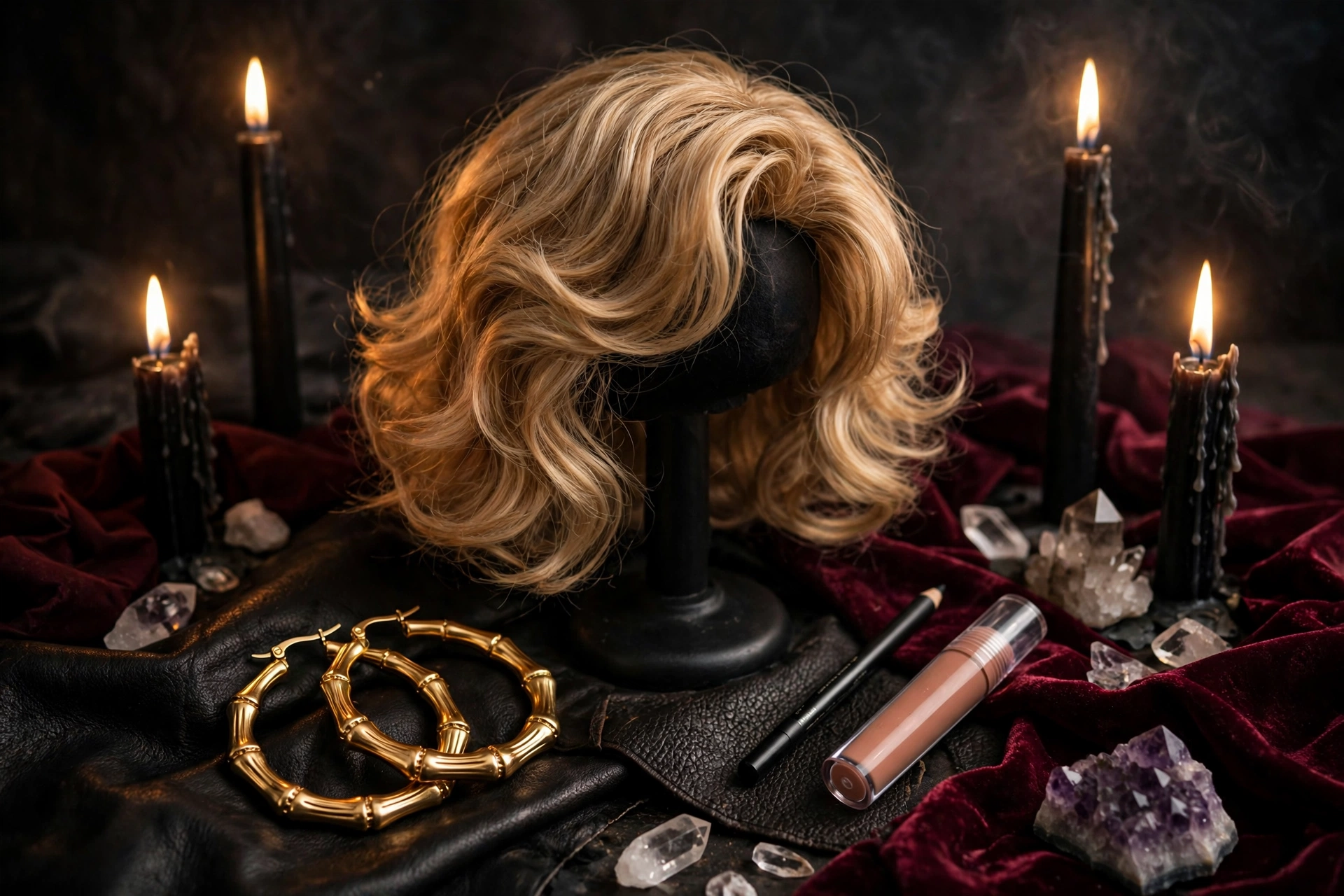
- The hair, temperature one. Golden blonde, worn long — waves or curls — under or without the cap. The 1992 register is the weave, the cap turned backward, and the hoops: bamboo, gold, oversized.
- The face, both temperatures. Brows kept slim and defined. Eyes lined dark. The lip is the architecture: deep liner, filled with brown-to-nude color — the lined lip ESSENCE names as part of her permanent legacy.
- The styling, temperature one. The “Real Love” formula as REVOLT documented it: jersey or streetwear on top, kneepads and combat boots below, gowns nowhere in sight. The contrast is the look — hard pieces, feminine face.
- The hair, temperature two. Keep the blonde, change the shape: a spiked crop, a sleek straightened fall, or full curls. ESSENCE’s record says she ran all of them inside one decade; the constant is the golden blonde itself, never one flat color.
- The finish, temperature two. Gold where the era put it — hoops, and if you’re honoring the Lady of Soul moment, the lip goes gold too. Mahogany is the documented detour when the blonde needs a rest.
The Ritual
Sit with this fact: the Queen of Hip-Hop Soul started as the girl doing everybody’s hair in her mother’s apartment. Weaves, perms, color — her own first, then her friends’. The most copied Black beauty look of the early ’90s was built by a woman who had held the combs herself, who chose the blonde on camera and told you exactly why: not outrageous, not a disguise — a step up.
That is the ritual this post leaves you with. The crown you can maintain with your own hands. Learn your own hair the way she learned hers — well enough to do it yourself, well enough to choose it on purpose — and the styling becomes what it was for her: not something done to you, but something you do.
FAQ
Why did Mary J. Blige wear blonde hair?
In her own words, from 1994: “Blonde to me, it makes me look better. The black hair didn’t look right and the redhead didn’t look right” — she called it “a step up… just something real nice.”
Who created Mary J. Blige’s early-’90s look?
Stylist Misa Hylton, working with Sean Combs, built the What’s the 411? image — baseball jerseys, kneepads and combat boots in place of gowns, most famously in the “Real Love” video (REVOLT; Hylton’s own account to NYLON).
Who did her hair later in the decade?
Hairstylist Gail Hudson says she worked with Mary for seven years, including the Share My World album cover (1997), and developed her infusion extension technique during that time. Wig stylist Dionne Alexander also styled wigs for her in the era, per Complex.
What defined her ’90s makeup?
Per ESSENCE’s retrospective: skinny brows, lined lips, and gold teeth are the elements her ’90s looks put into permanent rotation — the lip always lined, the brow always slim.
Could Mary J. Blige actually do hair?
Yes — documented. She did her own weaves, perms and color as a young woman, and did her friends’ hair in her mother’s apartment in Yonkers before fame.
The Verdict
| Element | Documented source |
|---|---|
| Blonde hair + combat boots as the 1992 debut presentation | AllMusic biography; EBSCO Research Starters |
| “Real Love” styling: jerseys, kneepads, boots over gowns (Hylton + Combs) | REVOLT, What’s the 411? 30th anniversary |
| Hylton: “combat boots, baseball caps, and jerseys” | Misa Hylton to NYLON (2021) |
| Her own verdict on the blonde, 1994 | My Life-era salon listening-party footage |
| Skinny brows, lined lips, gold teeth; blonde curled/cut/spiked/straightened | ESSENCE beauty retrospective |
| Gail Hudson: seven years, Share My World cover, infusion technique | The Cut Life interview |
| Dionne Alexander styled wigs for Blige in the era | Complex (via Central Track) |
| She did her own and her friends’ hair before fame | W Magazine (2018); AllMusic biography |
Whitney set the standard of natural. Aaliyah set the standard of restraint. Janet’s standard was the rebuild. Mary’s is the blueprint: proof, documented by the people who built it, that a girl from the projects could walk in wearing exactly what her block wore — blonde, lined and booted — and make the whole industry dress like her.
Glamour is yours to conjure. — Lakish
