This post contains affiliate links. If you buy through them, Blaq Vixen Beauty may earn a small commission at no extra cost to you.
Nobody told Grace Jones what a Black woman was supposed to look like — so she built the look herself, and the whole world copied it.
Born in Spanish Town, Jamaica, and raised in upstate New York, Grace shaved her head in the late 1960s, aiming for something more abstract than pretty. In 1970 she moved to Paris, modelled for Yves Saint Laurent and Kenzo, and shaped her close-cropped hair into geometric designs. Then came Jean-Paul Goude — photographer, art director, and her collaborator and partner — and together they made one of the most recognisable faces in pop: the flat-top, the sculpted cheekbones, the stare that does not ask permission.
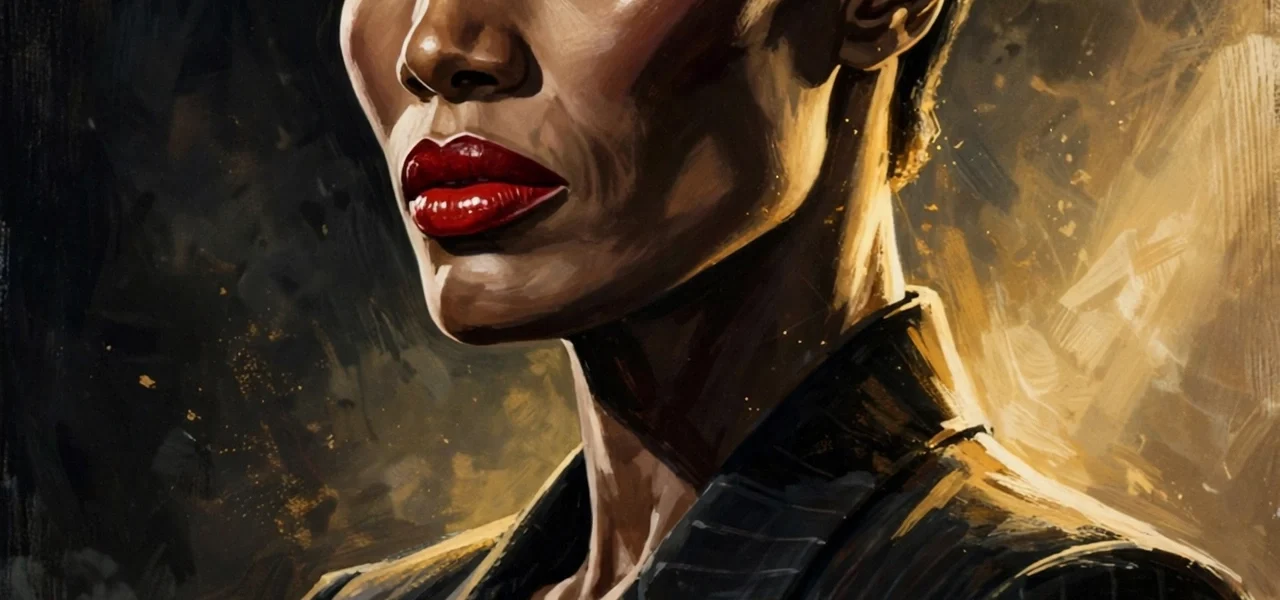
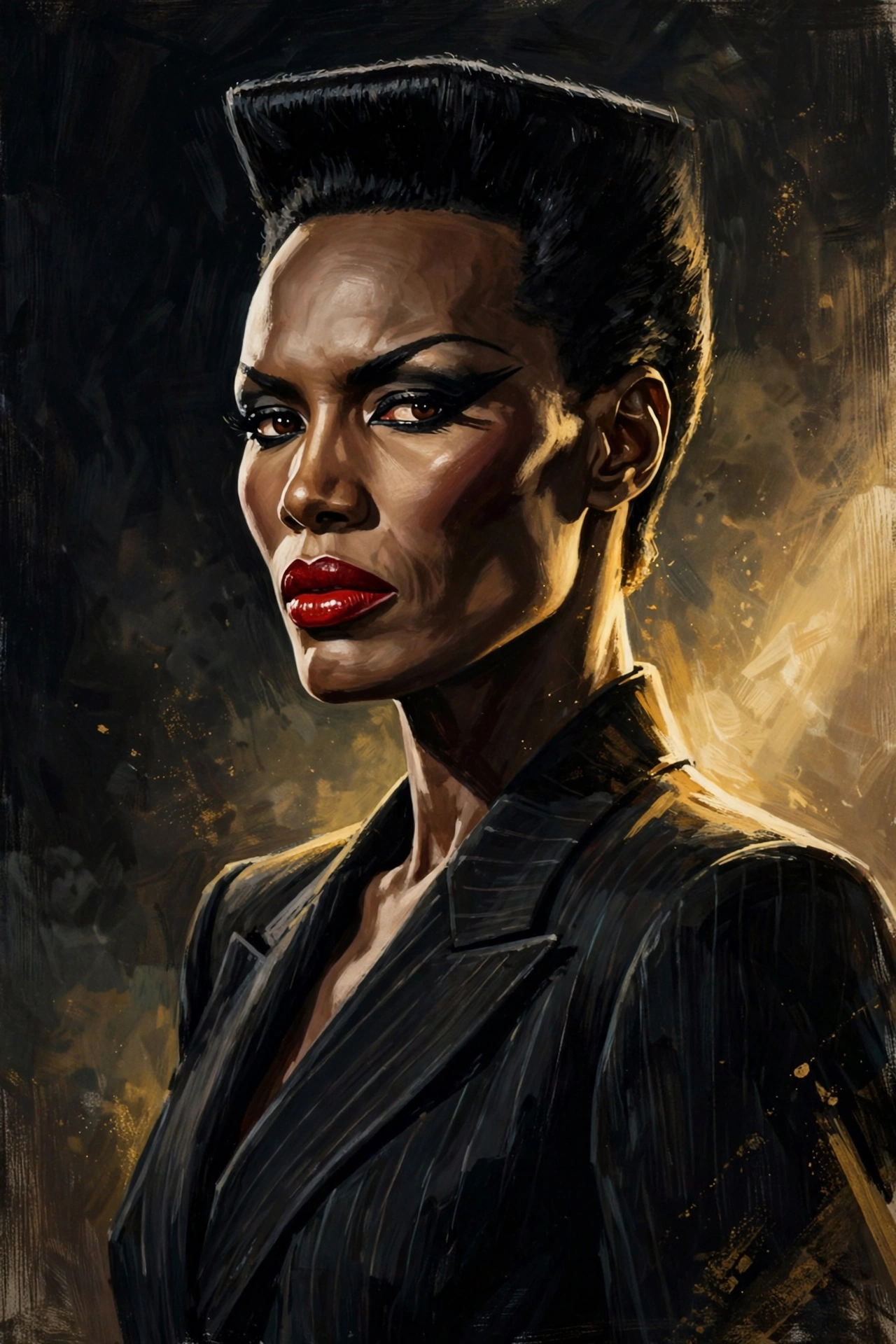
The Nightclubbing cover (1981) is the image in one frame: Goude made it in New York as a painted photograph — the flat-top, the wide-shouldered Armani suit, an unlit cigarette angled down from her lip, and skin rendered so glossy and sculpted it looks carved. Goude did the contour with a paintbrush. Contour had a cover star decades before it had a palette.
That is the whole lesson of this look: glamour as sculpture. Not softening, not blending in — carving the face into angles and letting the angles do the talking.
Why Grace, and why now
Josephine Baker was Spellbook Looks No. 01 — Paris-stage drama. Dorothy Dandridge was No. 02 — Hollywood precision. Diana Ross was No. 03 — the Boss who did her own face. Pam Grier was No. 04 — glamour as a weapon. Grace is No. 05 because she is the other side of all four: where Josephine performed, Dorothy perfected, Diana crafted, and Pam fought, Grace designed. Her face is not a look she wears — it is a work she made, with Goude, out of her own bone structure.
Her signature, as the photographs, the album covers, and the published breakdowns show it:
- The sculpted contour. Grace’s naturally high cheekbones made her the perfect canvas, and the contour is the look’s engine. Celebrity makeup artist Charlotte Tilbury, recreating Grace’s signature look for Vogue, calls the bone structure and the contouring graphic — heavy contour on the cheeks and the temples, with extra focus on the jawline and the nose, to echo Jones’s strong bone structure. Tilbury even uses the same shimmering neutrals from the eyelids to add high-definition contour to the cheeks — a trick she notes Jones herself loved.
- The smudged black liner, drawn out past the eye. Tilbury’s recreation starts with a generous amount of smudged black eyeliner that travels past the corner of the eyes, towards the hairline, with black pencil smudged along the lash line for structure and a shimmering neutral above it. Her longtime beauty collaborator, celebrity makeup artist Terry Barber, has worked with Jones for years on the look (via L’Officiel USA) — and he stresses imperfection: Grace’s glam often features boldly smudged liner, which makes this the rare icon look that forgives a less-than-steady hand.
- The bold red lip. Jones’s flawless face almost always features a bold red lip, an eye-catching contour, and plenty of eyeliner — that is the trio The List names as the signature. Tilbury finishes her recreation with lipliner and lipstick in a bold red hue, and even blends some lipstick into the cheeks as blush.
- The colour, when she wants it. The everyday Grace is black liner and red lip, but the Technicolor Grace is just as real: her 1970s and ’80s makeup was angled and full of eye-popping colour — vibrant shades of blue, orange, reds, and golds — and her A View to a Kill (1985) turn as May Day wore peacock-like eyeshadow. The colour is a variation on the look, not a different look.
- The blush, swept up. Of her most famous looks is the way Grace applied her blush — characteristic of the era, but made stunning by her sculpted features. Beauty World News describes it plainly: hollow the cheeks out, apply the blush in an upward motion from the tops of the sunken-in cheeks towards the temples, ’80s style.
- The hair — the flat-top. Her high-top fade was forward-thinking, yet timeless. By the ’80s she was spanning clean-cut high-tops — which became her signature — alongside breast plates, sharp suiting, and even stronger makeup. The flat-top is geometry you can wear: squared, deliberate, and impossible to mistake for anyone else.
This post is a wearable modern interpretation of that face — not a claim about the products she herself used. No one should pretend a modern contour stick is a 1981 paintbrush, and no Hoodoo practice is attributed to Grace here. The ritual in this post is Lakish’s own: the mirror work, the carving, the walking-in as a work of art.
The look, element by element
1. The contour — sculpture first, everything else second
Grace’s contour is not a soft bronze wash. It is graphic: heavy on the cheeks and the temples, with focus on the jawline and the nose, echoing bone structure that is already strong. Tilbury’s Vogue recreation makes the order clear — eyes first, then contour — because the contour is what turns the eye into the whole face.
- Start with a smooth base — foundation of your own choosing, as Tilbury puts it — and let it set before any sculpting begins. The contour needs a clean canvas, not a moving one.
- Place the contour on the hollows of the cheeks, the temples, the jawline, and the sides of the nose. Tilbury’s method is small dots of product, blended thoroughly — a little at a time, built up, never one heavy stripe.
- Add the high-definition touch Tilbury notes Jones herself loved: take the same shimmering neutral used on the eyelids and use it to contour the cheeks, so the highlight and the shadow belong to the same family.
2. The eye — black liner, smudged past the corner
The eye is one colour, one gesture, and a lot of nerve: black liner, smudged, travelling past the outer corner towards the hairline. No neat wing, no crisp line — the smudge is the point, and Barber’s imperfection note is the permission slip.
- Lay a generous amount of black eyeliner along the upper lash line and smudge it outward, past the corner of the eye, towards the hairline — the line should fade as it travels, not stop in a point.
- Smudge black pencil along the lash line itself to give the eye structure underneath the smoke, then layer a shimmering neutral shadow above the liner so the eye has dimension and the lid catches the light.
- The colour variation. For the Technicolor Grace — the Studio 54 nights, the A View to a Kill peacock eye — swap the shimmering neutral for a vivid shade: peacock blue, electric orange, or gold, worked in the same smudged, geometric shape. The shape stays Grace; only the colour changes.
3. The brow — strong, straight, and architectural
Grace’s brow is part of the architecture, not an accessory to it: strong, defined, and straight enough to hold the geometry of the whole face together. It frames the smudged eye the way a frame holds a painting — firm, and out of the way of the art.
- Map a strong, defined brow with a clean line and a straight-ish arch — the brow should read deliberate, not soft.
- Fill with short strokes and set so it holds through the contour and the night.
4. The lip — two versions, one decision
Grace’s lip is bold, always — but the shade changes the temperature of the whole face.
Version A — the bold red (the signature). The lip Tilbury finishes with: lipliner and lipstick in a bold red hue, the red that sat under the unlit cigarette on the Nightclubbing cover and smeared on the microphone in her 2003 performances. Red is the Grace lip — the one the whole look was built around.
Version B — the dark bordeaux (the after-dark version). The RVDK couture fantasy built on Grace’s look pairs thick black winged liner with slick cherry or dark bordeaux lips, and Beauty World News names a rich red or berry as the finish for the high-impact look. Same boldness, deeper shade, a whole different hour of the night.
- Line first, in a shade matching the lipstick, to define the shape and stop the colour running. The line is part of the geometry — keep it sharp.
- Fill with a brush for precision, blot, then a second layer for wear — and keep the finish matte or satin, not glossed, so the lip holds its edge against the smudged eye.
5. The blush — swept up from the hollow
Grace’s blush is not a soft flush on the apples of the cheeks. It is applied from the hollow upward, ’80s style, and it works because her cheekbones give it somewhere to go. Tilbury’s version of the same idea is simpler: blend some of the lipstick into the cheeks, so the cheek colour and the lip colour are one colour, in two places.
- Hollow the cheeks out — a fish face, as Beauty World News puts it — and apply the blush in an upward motion from the tops of the sunken-in cheeks towards the temples.
- Or, the Tilbury shortcut: take the lipstick from Version A or B and blend a little of it into the cheeks, so the blush and the lip match exactly.
6. The hair — the flat-top, two ways
Grace’s hair is never small and never an afterthought. The clean-cut high-top is her signature — squared, deliberate, geometry you wear on your head. For a wearable modern version, both crown options are on the table.
- The flat-top. Squared and crisp, the Nightclubbing silhouette — the crown as Grace wore it, a statement of androgyny and intent. For short hair, the shape is the starting point; for longer hair, pin it up and roll the front with a foam roller to recreate the volume, as Beauty World News suggests.
- The sculpted updo. The same geometry, softer: hair swept up and shaped into a tall, squared silhouette, or a sleek pulled-back shape that lets the contour and the liner carry the drama — the nights when the hair should frame the face instead of standing above it.
The 5-step Spell
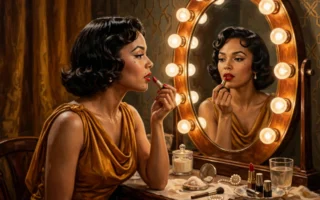
This is Lakish’s ritual, not Grace’s — a modern mirror working built on Grace’s lesson: don’t ask the room what a Black woman is supposed to look like. Design the face yourself, and let the room catch up.
- The sculpture, first. Sit at the vanity, mirror split if you like — you on one side, Grace on the other. Place the contour in small dots — cheeks, temples, jawline, nose — and blend, slowly. This is the carving; a steady hand here steadies everything after it. Say it plainly: I design my own face.
- The line. Black liner, smudged past the corner, towards the hairline. Don’t chase perfect — Grace’s own collaborator says imperfection is the point. As you smudge it out: I don’t ask permission.
- The brow. One strong, straight line — the architecture, not the accessory. As you draw it: I hold my own frame.
- The lip. Choose — bold red or dark bordeaux — in your own light, on your own lips. Line it sharp, fill it, blot it, second layer. This is the decision Grace made every time she stepped out as herself: The lip is the period. The face is the sentence.
- The crown. Square the hair up — flat-top tall, or swept into a sculpted shape — whichever crown you’re wearing tonight, wear it like geometry, not decoration. Stand up. Check the whole face — contour, smudge, brow, lip — and then leave the mirror alone. The look is done when you stop adjusting it. Walk in like the room was built for you. Because it was.
Glamour Magick note
Grace’s magick here is not a spell from a book and not a practice attributed to her. It is the most radical glamour magick there is: a Black woman refusing the pretty mould entirely — shaving her head, squaring her hair, painting her face into angles — and making the mould irrelevant. The flat-top as architecture, the contour as carving, the red lip as a signature nobody else can forge.
Wear this look when you need to be unmistakable: a night where you are not blending in, a moment where you are not softening anything — you are arriving as a work of art, and the room adjusts to you.
FAQ
Is this Grace’s actual makeup?
No — this is a wearable modern interpretation of her signature looks, built from album covers, photographs, and published breakdowns, including Charlotte Tilbury’s Vogue recreation and Terry Barber’s long collaboration with Jones. No product here is claimed to be one she herself used.
Do I have to wear the flat-top to do this look?
No. The flat-top is the Nightclubbing crown, and the sculpted updo is the same geometry, softer — both are Grace. Pick the crown that fits the night, and the contour and the smudged liner carry the rest.
My face isn’t as angular as Grace’s — will the contour still work?
Yes — that is what the contour is for. Tilbury’s whole point is that the contour builds the angles: small dots, blended thoroughly, on the cheeks, temples, jawline, and nose. Start lighter than Grace and build up.
Is the smudged liner too much for daytime?
The full smudge — past the corner, towards the hairline — is evening glamour. For daytime, keep the black pencil tight to the lash line, skip the outward smudge, and wear the bold red lip (Version A) with a lighter hand on the contour.
What comes next in the series?
Eartha Kitt — Spellbook Looks No. 06, the last of the vintage six. Then Beyoncé leads the modern wing.
Glamour is yours to conjure. — Lakish