This post contains affiliate links. If you buy through them, Blaq Vixen Beauty may earn a small commission at no extra cost to you.
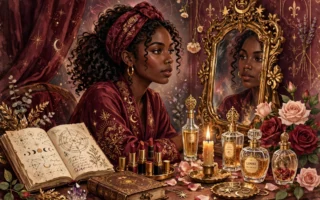
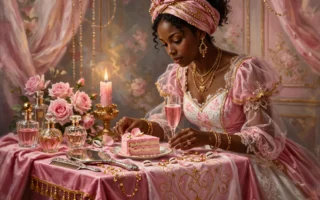
This altar has a name for itself, given by its keeper in her own words: a digital community altar for our icons.
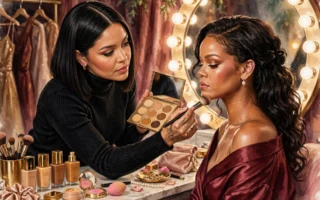
Sit with what that sentence actually describes. A figure is seated. She is honored. Her glamour is studied, recreated, embodied — the look rebuilt at a living woman’s vanity, the presence taken on like a garment. That move — seating a figure held in millions of minds, and working with the presence she has accrued — is the central move of an entire magical current, one this altar has been practicing from the Black glamour tradition without ever needing the current’s name.
This piece names the kinship, tells the current fairly, and then draws the lines where this altar parts from it. Because kinship is not identity, and the differences are the doctrine.
The Current, Fairly Told
Pop culture magick was named and systematized by Taylor Ellwood, whose Pop Culture Magick appeared in 2004 and who extended the work in The Pop Culture Grimoire (2011). Its roots run into chaos magick — the current shaped by Peter J. Carroll and others in the 1970s and 80s — where belief is treated as a tool, results are prized over orthodoxy, and spirits are workable models rather than articles of faith.
The engine of the whole current is attention. In Ellwood’s framing, a figure held in millions of minds — a pop star, a film character, a whole fictional pantheon — accrues presence, the way a crowd’s belief builds a charge around a name. Chaos magick calls such a buildup an egregore. The worker petitions it, embodies it, channels it: fictional characters worked with as spirits, celebrities approached as living icons, media universes kept as pantheons with their own rosters of power.
Told straight, credited, no sneering — this altar owes every source tradition the same fairness it asks for its own. The current is real, it is two decades old, and it works on a true observation about what attention does. What its literature largely lacks — overwhelmingly white, fandom-built, cheerfully boundary-free — is any doctrine of ancestors, any closed doors, any requirement of reverence. That absence is exactly where this piece speaks from.
Where the Altar Agrees
Attention feeds presence. This altar has never doubted it — it is the operating principle of the whole Spellbook. A look recreated is attention paid. A name spoken on the record is attention paid. A ritual repeated by thousands of women at thousands of vanities is attention compounded into something with weather. The current runs on that currency; so does the altar. The coin is the same.
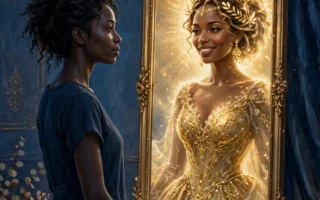
And embodiment as working: the current calls it channeling. The Spellbook calls it a recreation — a living woman at her mirror, taking on Josephine’s line or Dorothy’s poise with a makeup brush and an intention. Different vocabularies, one mechanics: the icon’s glamour, deliberately worn, changes the woman wearing it. On this ground, the altar and the current stand together, and this piece says so without flinching.
Where the Altar Parts
Three fences. Stated plainly, because they are the reason this altar is not simply a chapter of someone else’s current.
Reverence over utility. The pop culture current treats its figures as raw material — useful presences, to be invoked, hacked, and set down when the result is got. This altar seats its icons as elders: honored dead, living legends, women approached with the manners due their rank. An icon here is not a battery. She is a person — or the memory of one — and she is approached, never used.
Ancestors first. The standing tenet of this altar holds over every icon, living, dead, or imagined: the benevolent ancestors are consulted before any of them. The current has no such court above its pantheons. This altar does, and the order is not negotiable — no figure, however beloved, however many millions hold her in mind, is seated above the family table.
Closed doors stay closed. Hoodoo is a closed Black American practice, with its own spirits, its own protocols, its own people. It is not a pop culture system. No fictional figure gets seated inside it, no current’s method gets imported into it, and no shelf-sharing changes that. The currents may share a library. They do not share a root.
The Fictional Wing, Opened
And yet — there is a wing of this altar where the imagined belong, and this piece opens it properly.
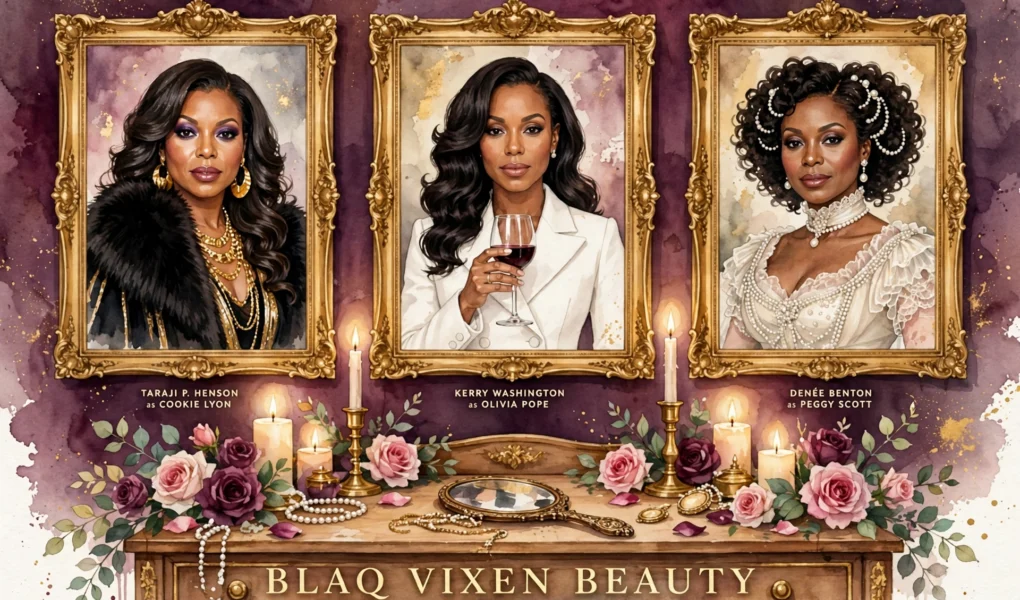
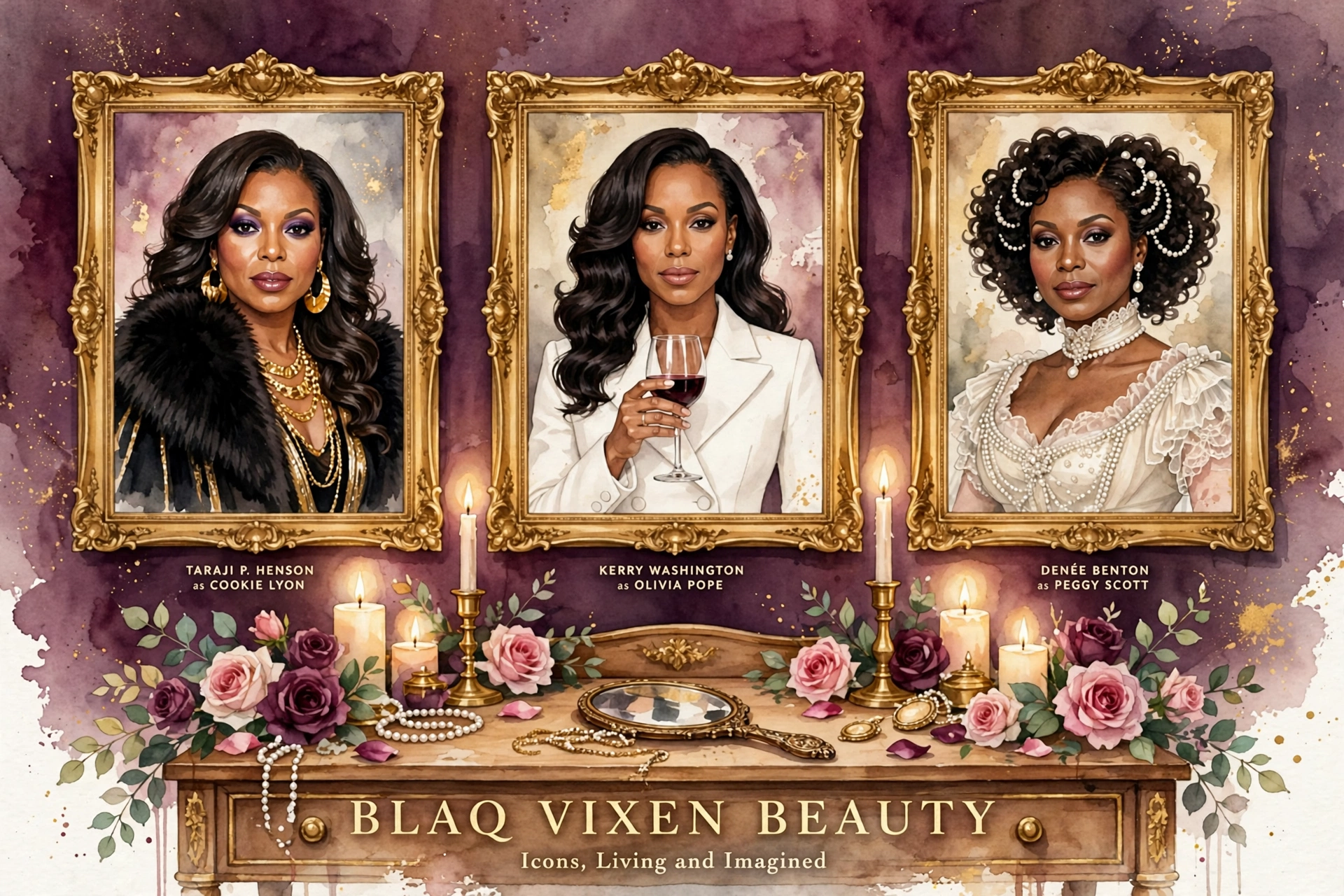
A fictional icon is seated here as a story the people keep telling: honored for what she gathers in us, never claimed as an ancestor, never confused with the dead. Cookie Lyon is already on this site — the mogul in furs, whose sunglasses this altar’s keeper identified down to the model number — an archetype of appetite and empire that a generation of women tried on in their own mirrors. Olivia Pope stands as the fixer in white: the woman who walks into the room where the disaster has already happened and becomes, instantly, the most composed person in it — crisis handled like a couture fitting, power worn as tailoring and nerve, a whole nation’s worth of viewers studying how she stands. And Peggy Scott — whose wedding this altar has just honored in full — is the society bride-intellectual, a Black woman of the 1880s imagined whole, whom viewers now hold in mind with a devotion no one instructed them in.
That devotion is the datum. Millions of minds hold these women; the holding is real even though the women are imagined; and a story a people keeps telling about itself is a force in that people’s inner life, whether or not it ever had a body. The altar’s doctrine simply refuses to lie about which kind of seat each figure occupies. The ancestors are the ancestors. The icons are the icons. The imagined are the imagined — honored in their own wing, in their own way, under the ancestors’ roof.
The Altar Widens, the Root Holds
Pop culture magick gives this Grimoire a name for the weather outside its walls, and the altar accepts the gift with thanks. But the altar’s answer to that weather is older than the current, and simpler:
Attention is an offering. Spend it like one.
Seat your icons with reverence. Consult your dead before your legends. Keep the closed doors closed and the imagined in their wing. And remember that every look recreated, every name spoken, every hour of your regard is currency leaving your hands — so let it land, as it lands at this altar, on women worthy of the spending.
Glamour is yours to conjure. — Lakish