This post contains affiliate links. If you buy through them, Blaq Vixen Beauty may earn a small commission at no extra cost to you.
Before the glamour is worn, it is washed.
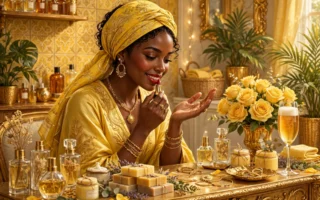
Every strand of this altar teaches some dressing of a surface: the face dressed in color, the room dressed in smoke, the air dressed in scent. The waters are the oldest dressing of all, and the humblest — and they hold three offices at once, which is why no vanity and no altar in the record is complete without them. They wash. They dress. And they offer.
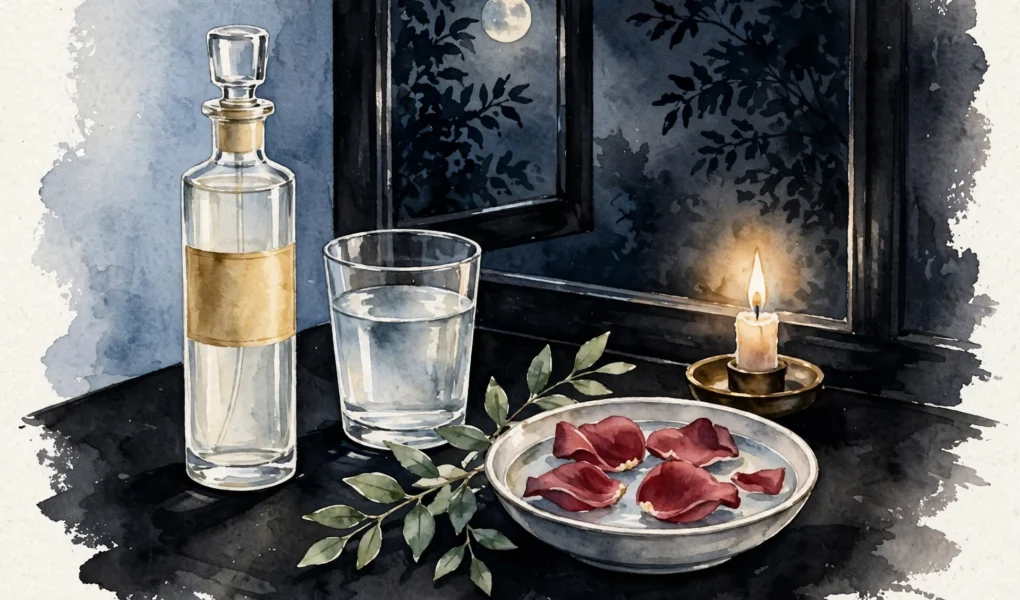
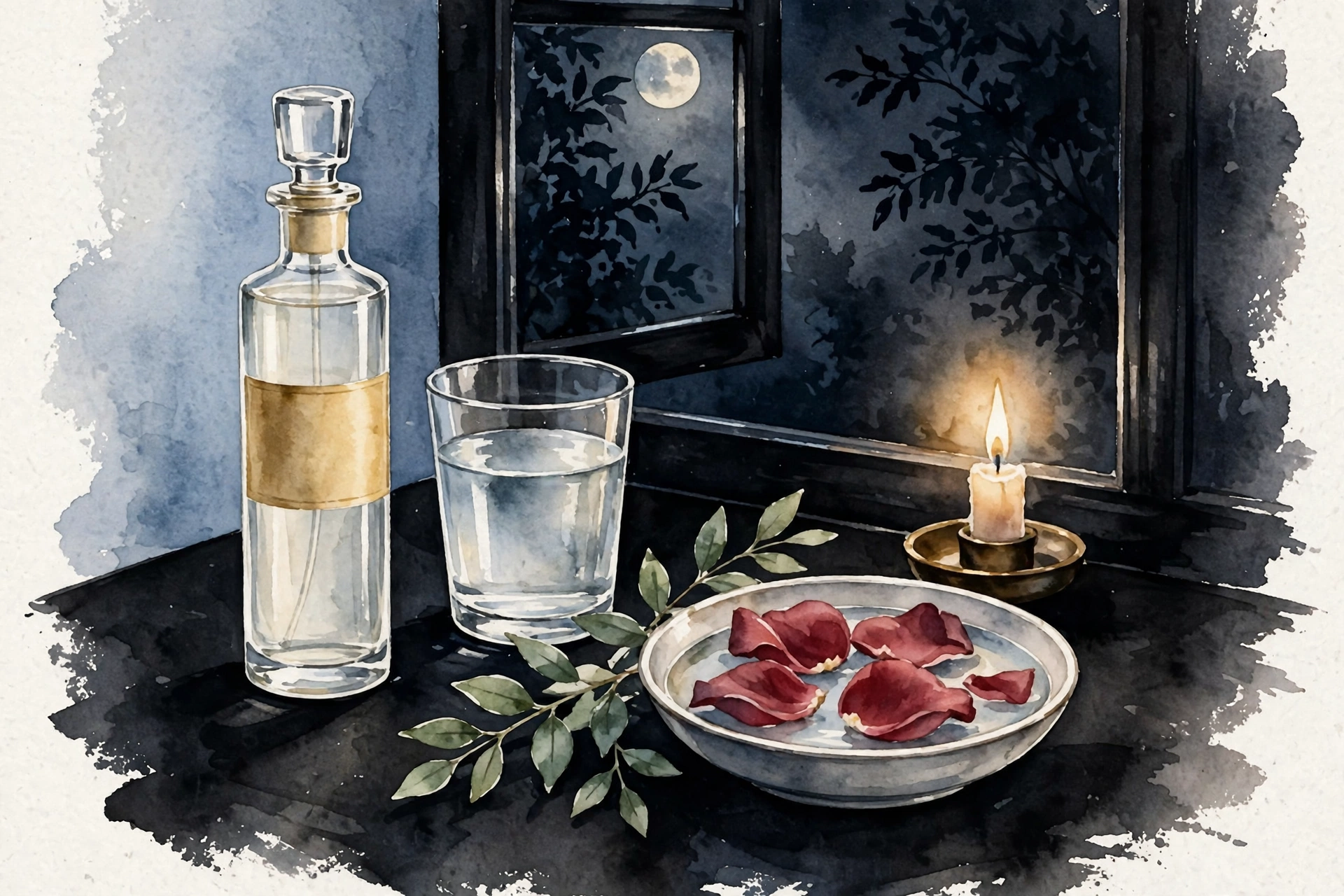
The first office comes first, in this house as in every working: a glass of clear water is the ancestor altar’s first furniture in more than one tradition this altar honors. Consult your benevolent ancestors first — they are the first authority, before any root, any book, any bottle — and know that the water set out for them, fresh and clear, precedes every other use this piece will name. Hospitality to the unseen company comes before hygiene, before dressing, before glamour. That is the order. Keep it.
Florida Water: The Documented Bottle
The most famous spiritual water in the American record began as a commercial cologne, and this altar prints its history as history.
Florida Water was created in 1808 by the New York perfumer Robert Murray, of the house that became Murray & Lanman — a citrus-and-spice cologne named, in the marketing poetry of its century, for Florida and the fabled fountain of youth. That is the commercial record, and it is stated here as exactly that.
The second life is the one this piece exists for. Across the documented practice of American conjure, spiritualism, and Afro-Caribbean devotion, that drugstore bottle became standard equipment: sprinkled in rooms, splashed on persons, set out on altars, used to refresh a space and its company alike. A manufactured cologne, adopted so completely by the working houses of this country that its bottle reads now like ritual furniture. The manufacturers made a perfume. The practitioners made it a water. Both facts are true, and the second is the more interesting history — a people taking what the store sold and seating it, by use and by generations, at the altar.
Hoyt’s Cologne: The Interview Record
If Florida Water is the famous bottle, Hoyt’s is the testified one.
Again and again in Harry Middleton Hyatt’s interview volumes — the thousands of pages of testimony gathered from Black Southern rootworkers themselves — the workers name their materials, and among them, plain as groceries, is Hoyt’s Cologne: bought at the store, kept on hand, used in the work. This altar weighs that heavily, and readers should know why. The formulary shelf will tell you what was sold to practitioners. The interviews tell you what practitioners used, in their own words, on the record. Elder testimony outranks catalogue copy in this house, always.
What Hoyt’s presence in the interviews shows is simple and worth sitting with: the waters were working equipment. Not symbolism, not superstition’s decoration — supplies, purchased deliberately and taken seriously, in the same breath as the candles and the roots.
Rose Water and the Older Waters
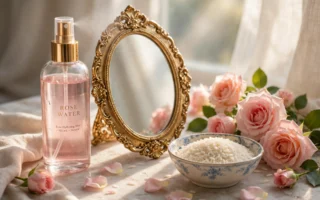
Older than any bottle with a label is the water the vanity has kept for centuries: rose water — the rose, distilled into its own scent, at the dressing table across culture after culture, the Glamour Cabinet’s cosmetic shelf in liquid form. Beside it in the devotional record stands Kananga water, the fragrant water of Afro-Caribbean practice, offered and sprinkled in its own houses’ customs.
The altar keeps the distinction clean: the vanity’s waters refresh the woman; the altar’s waters refresh her company. Some bottles serve both tables, and have for two hundred years. The office depends on the hand that pours — which is to say, on the intention that addresses the water, exactly as the bath piece on this site teaches: a water is never only water once it has been spoken over.
The Three Offices, Gathered
Hygiene. The washing and refreshing of person and place — the surface cleaned so the work stands on clean ground. The conjure record keeps this office in Hoodoo’s own house: a closed Black American practice, ancestors first, its waters used as its own record documents.
Dressing. The anointing of what will be used — candles, tools, the worker herself — scent laid on an object the way oil is laid on a pulse point: to seat the intention in the material.
Offering. Water and scent laid out for the unseen — in Vodou’s house, in its own custom and never merged with conjure’s: perfume and scented water belong to the service of Metres Ezili Freda Dahomey as her documented portrait shows it, a dressing table kept as devotion, which this altar has honored in her Toilette piece as portrait and lineage. Karen McCarthy Brown’s Mama Lola carries that world’s record for any reader who wants it from the source shelf.
Name the offices by this altar’s taxonomy and they sort cleanly. The offering is beauty magic — devotion laid out in scent and water, the unseen company honored for its own sake. The dressing is a means that takes its name from its end: water anointing the worker for beauty’s sake is beauty magic; water dressing a working aimed at how she will be perceived serves glamour without being glamour itself. The washing is foundational work — clean ground is preparation, the work before the work, and this altar names it so rather than dressing it in glamour’s name. And the rose water kept at the vanity for the pleasure of a refreshed face is vanity’s honest register, and needs no grander name.
Three offices, three houses, one element. This altar reports what the record documents — the practices and the beliefs as the practitioners themselves stated them — and claims no effects beyond them. The waters do what the record says they were used to do. What they do, in the doing, belongs to the houses that keep them.
Clean Ground
Water is the cheapest thing on the altar and the first thing on it. A glass of it, set out fresh, is hospitality older than any bottle in this piece.
Dress the woman, by all means — this site exists for the dressing. But wash first, and set out the water for her company, and let the glamour begin the way every durable thing in the record begins: on clean ground, in a house that was expecting guests.
Glamour is yours to conjure. — Lakish
From the Altar’s Bookshelf
- Zora Neale Hurston, Mules and Men (1935)
- Karen McCarthy Brown, Mama Lola: A Vodou Priestess in Brooklyn (1991)
As an Amazon Associate, Blaq Vixen Beauty earns from qualifying purchases.