This post contains affiliate links. If you buy through them, Blaq Vixen Beauty may earn a small commission at no extra cost to you.
There are two baths at this altar, and they do not do the same work.
The first bath you have already met here. Purge Me with Hyssop is the bath that comes before the shine — the uncrossing bath, taken downward and outward, carrying crossed conditions off the body and down the drain in the grammar of the fifty-first Psalm: purge me with hyssop, and I shall be clean. That bath removes what is not yours.
This bath installs what is.
Before any working at this altar — before the water is drawn, before the petals fall — consult your benevolent ancestors first. They are the first authority at this table, before any root, any book, any teacher. A bath taken without them is only water. A bath taken with them is a working.
The Direction of the Water
Every bath has a direction, and the direction is the doctrine.
The uncrossing bath moves off: off the skin, off the name, down and away. You step out of it lighter because something has left you. The beauty bath moves in: into the skin, into the self-regard, into the woman who will step out of the water when the soaking is done. Same tub. Same element. Opposite grammar. A reader who confuses the two will work at cross-purposes with herself — sweetening what she meant to strip, stripping what she meant to keep. The altar keeps its baths in their own houses, and so should you.
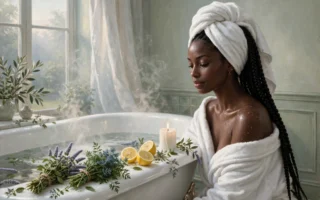
The beauty bath is not a treatment. Nothing in it promises your skin anything, and this altar does not sell outcomes. It is an anointing you sit inside of — a bath taken not to be cleansed of yourself, but to be seated in yourself, the way a queen is seated: deliberately, and in no hurry to rise.
Name it truly, then: this is beauty magic — not glamour. Glamour magick’s object is the room: the eyes of others, how the worker is beheld once she enters it. Nothing in this bath addresses a room. Its object is beauty itself, seated in the woman who soaks, and work whose object is beauty is beauty magic, honored at this altar under its own name. The bath prepares the woman a glamour may later be laid over. Preparation is not the glamour, and this altar does not call it so.
The Old Materials
Milk and honey arrive in the record as imagery before they arrive as ingredients: the scriptural shorthand for a land of promised sweetness and plenty, a phrase so old it has worn smooth in the mouth. Honey carries a second, working record. In the documented testimony of Black Southern rootworkers — the interview volumes of Harry Middleton Hyatt, and Zora Neale Hurston’s record before him — honey is the sweetening substance, the material that draws conditions toward kindness. Carrying honey from the jar into the bathwater is this altar’s adaptation of that record, and it is labeled here as exactly that: an adaptation, honestly made, never backdated into a tradition that did not write it down.
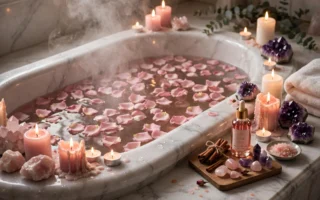
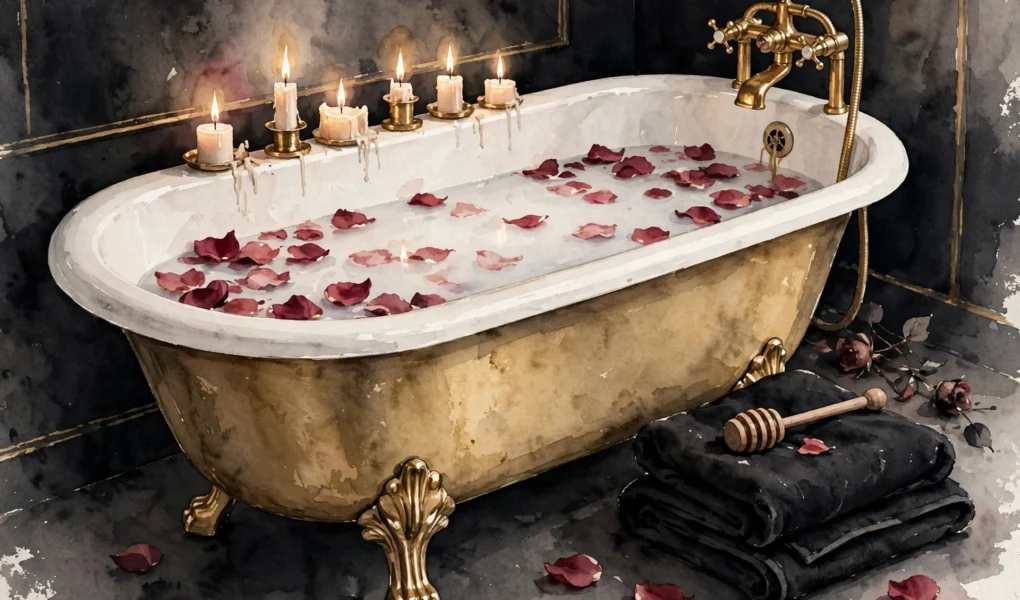
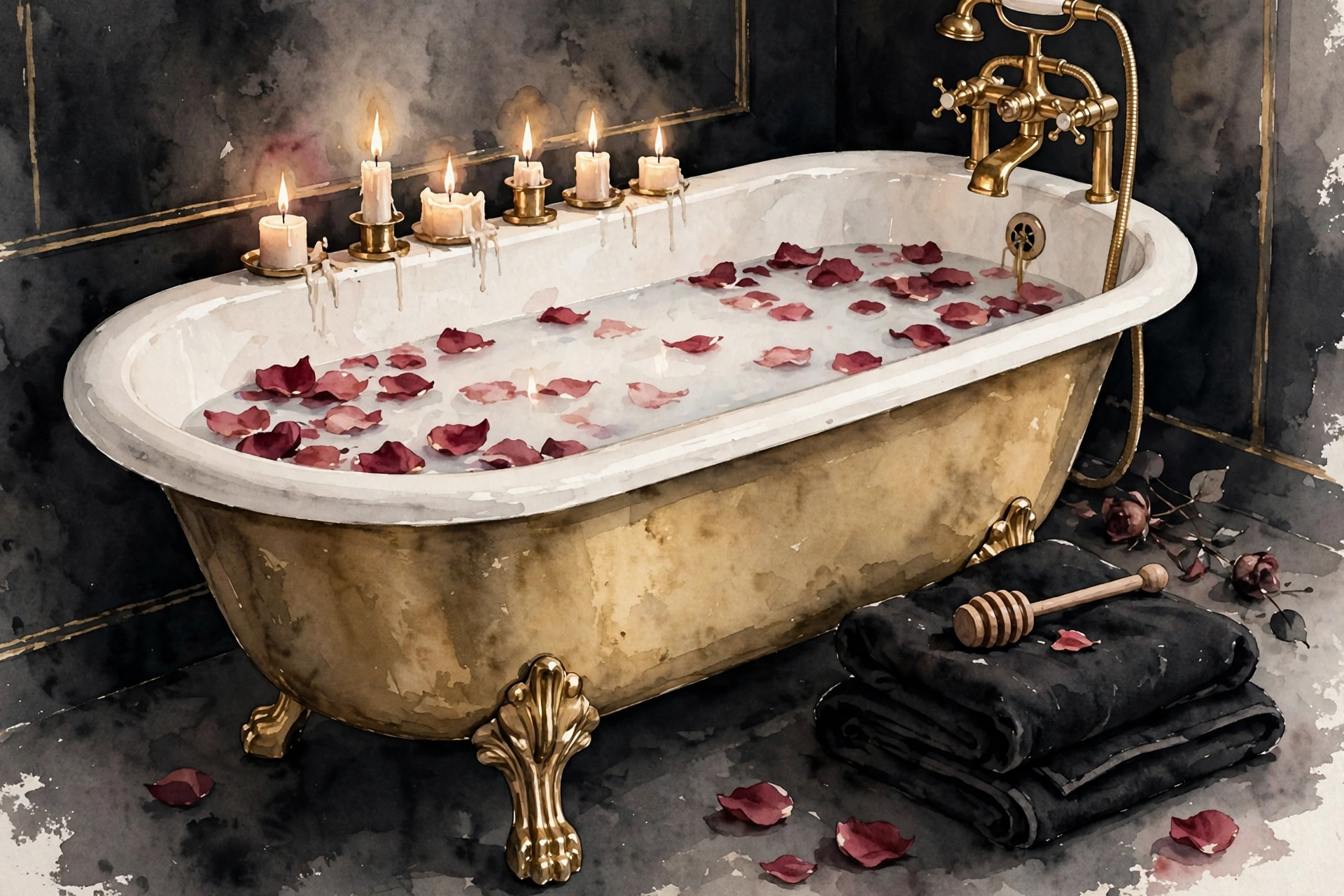
The rose needs no defense. She is beauty’s oldest flower in the record of adornment, strewn on water since long before any of our grandmothers’ grandmothers, and she comes to this bath as what she is — the altar’s own color, deep rose against black and gold.
And the famous milk bath of the Egyptian queen? Legend. It is labeled legend here, as it should be labeled everywhere: a beautiful story the centuries have told about a beautiful woman, told so often it has been mistaken for a record. This altar keeps its legends in the legend house. They are honored there. They are not evidence.
Water, Addressed
A bath at this altar is never water alone.
The law the Vodou bath tradition documented — another house’s baths, honored here and not merged with this one — is that the water is addressed: spoken to, prayed over, given its instruction before the body enters it. The beauty bath keeps that law in its own house. You speak over the water what the water is for. You say who is soaking. You say who she is becoming. Then you enter it the way you would enter a room where your name has already been announced.
The soak is the working’s duration, and stillness is its mechanism. There is nothing to scrub and nothing to stir. The woman in the beauty bath is not performing the working; she is undergoing it, the way fruit undergoes ripening — in warmth, in sweetness, in time that cannot be hurried without being spoiled.
Stepping out is the closing. What the water keeps, the water keeps: the old self-image, the day’s accumulated smallness, the version of you that apologized for taking up the tub. It goes where bathwater goes. You do not carry it out with you. That is the whole grammar of the drain, and it works in both directions — the uncrossing bath sends down what was put on you; the beauty bath sends down what you have outgrown.
The Modern Shelf
This altar shelves its books honestly, so let the modern ones be named modern.
The contemporary ritual-bath revival has its own literature, and two of its volumes stand up to the altar’s standard. Deborah Hanekamp’s Ritual Baths: Be Your Own Healer (2020) treats the bath as a healer’s instrument, photographed and practiced in the open. Elizabeth Dickson’s Bath Magick (2026) gathers bath and shower rituals for healing, rest, and empowerment from a working water witch’s own practice. Both are modern books, written in our century, for our century’s seekers — and there is no shame in that shelf. The shame would be in dressing them as antiques. The beauty bath at this altar stands on older materials than either book, and says so; where the modern shelf agrees with the old grammar, it is welcome to sit beside it.
The Rehearsal
Understand what you are doing in that water, and the bath will never be mere bathing again.
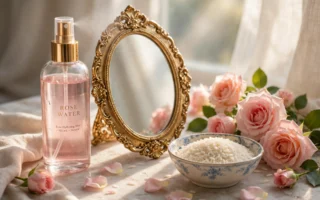
You do not soak to become someone else. The beauty bath is a rehearsal — the body practicing, in private and in sweetness, the woman it already intends to be in public. Presence is not improvised at the door; it is rehearsed at the vanity, at the altar, in the water, until the woman in the bath and the woman in the mirror stop negotiating and become the same woman.
Draw the water warm. Lay the rose on it like the altar lays its cloth — deliberately. Speak over it. Enter it as an announced guest in your own becoming. And rise from it the way the soaked and certain have always risen: slowly, and already shining.
Glamour is yours to conjure. — Lakish
From the Altar’s Bookshelf
- Deborah Hanekamp, Ritual Baths: Be Your Own Healer (2020)
- Elizabeth Dickson, Bath Magick: Over 40 Bath and Shower Rituals to Heal, Relax and Empower (2026)
- Zora Neale Hurston, Mules and Men (1935)
As an Amazon Associate, Blaq Vixen Beauty earns from qualifying purchases.