This post contains affiliate links. If you buy through them, Blaq Vixen Beauty may earn a small commission at no extra cost to you.
Before the ring light, before the bulb, before the mirror learned to glow — there was the flame, and the flame was working.
The candle is the oldest instrument on this altar, older than any jar or bottle in this series, and it earned its seniority in the oldest company there is: the first candles in our houses burned for the dead and before the holy. So the house order is not a formality here. Before any working at this altar — before a wick is trimmed or a candle dressed — consult your benevolent ancestors first. They are the first authority, before any root, any book, any flame. A candle lit without them is lighting. A candle lit with them is a working.
The Dressed Candle
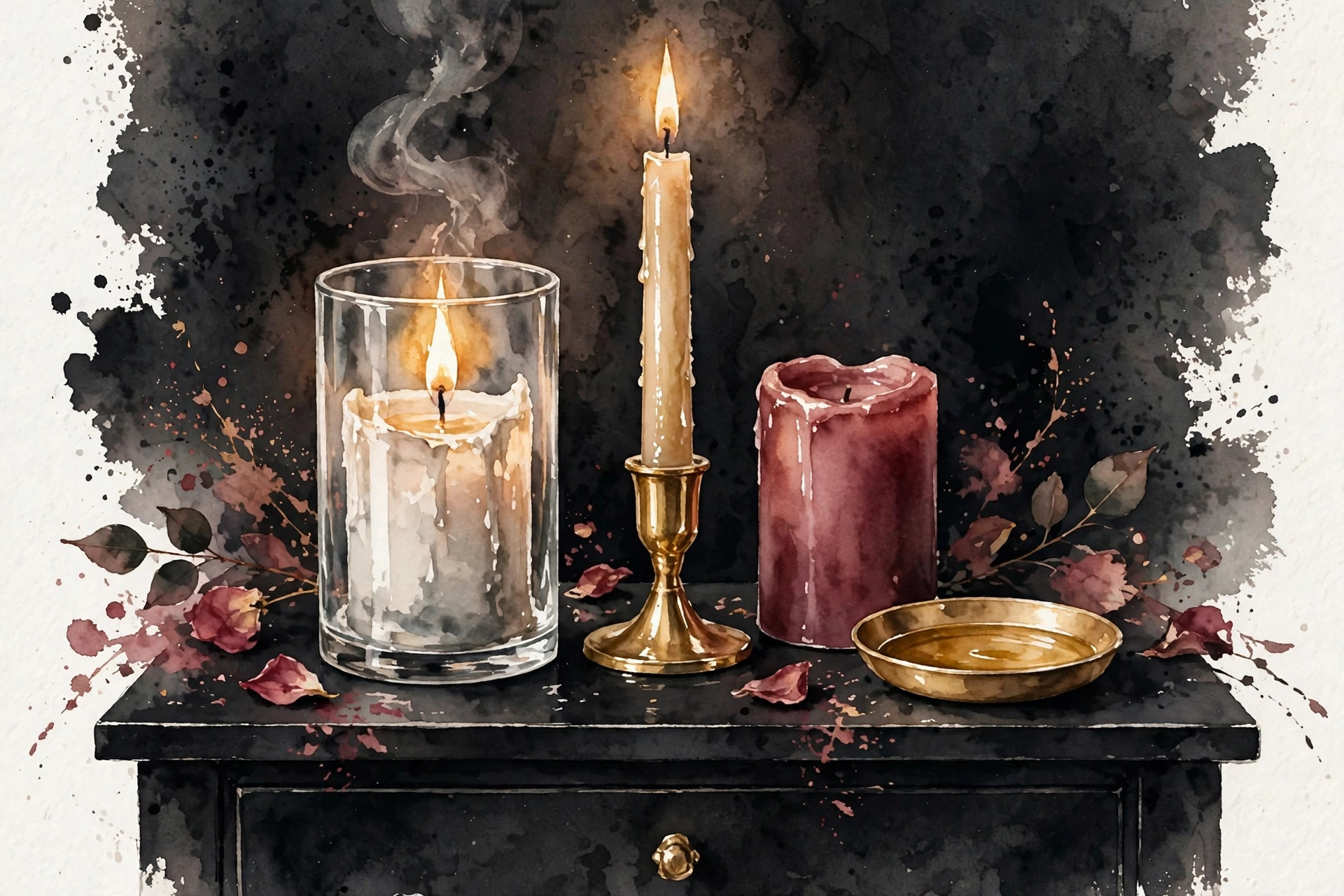
In the documented record — the testimony of Black Southern rootworkers in Harry Middleton Hyatt’s interview volumes, and Zora Neale Hurston’s account of the same world — a working candle is rarely burned as it was bought. It is dressed: oil worked into the wax by hand, the candle prepared the way a body is prepared, anointed with intention before it is given its task.
Understand what dressing is, in the record’s own grammar, because the modern shelf will try to sell it to you as a recipe. Dressing is an act of address. The hands on the wax are saying what the candle is for; the oil is the medium of the saying, the way water is the medium of a bath’s address. This piece teaches the grammar and declines to hand out a formula — not from coyness, but because the record’s workers dressed candles the way speakers form sentences: from a living vocabulary, for a specific occasion, in their own words. A copied sentence is not a dressed candle. It is a candle with oil on it.
Hoodoo is a closed Black American practice, and its candle work is taught here from within its own record, in its own house — testimony first, catalogue copy nowhere.
The Vigil
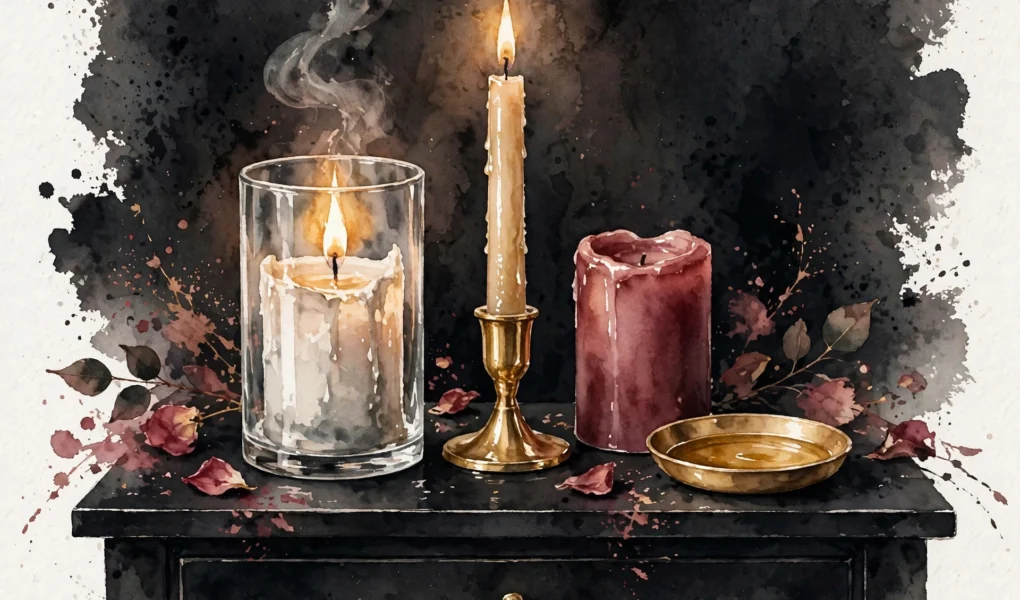
Some candles are burned in a sitting. The vigil candle is burned in sittings — the tall glass candle kept across days, lit and revisited, lit and revisited, the working measured not in minutes but in evenings.
The vigil is the candle family’s version of the jar‘s patience, and First Flame keeps returning to that patience because it is the strand’s whole doctrine: the work that is fed on a schedule outlasts the work that is performed in a blaze. A vigil candle asks its worker to come back — to check the flame, to sit with the intention again, to let the burning be slow enough to change the burner. Whatever else the record claims for the vigil, and it claims much, this much is plain human fact: a woman who returns to the same flame for seven evenings has done something to herself, whether or not the candle has done anything at all.
The Reading
The record’s workers did not only burn candles. They read them.
Candle reading — the interpretation of a burn as it unfolds — is documented across the practice: the flame high and steady or low and struggling, the wax running clean or weeping down one side, the glass left clear or smoked black at the top. The worker reads her fire the way she reads weather over her own house: attentively, personally, as one source of intelligence among several.
This altar presents the reading as what it is in the record — an interpretive practice, a literacy — and not as a fortune-telling machine with a printed key. A smoked glass means what a lifetime of burning has taught that worker it tends to mean, in her work, beside the other signs she keeps. The meanings are earned at the wick, not downloaded. Any source that sells you a universal dictionary of wax is selling you the dictionary, not the literacy.
The Candle at the Vanity
And then there is the candle’s second career, the one this blog is built on: the flame as the glamour’s first lighting designer.
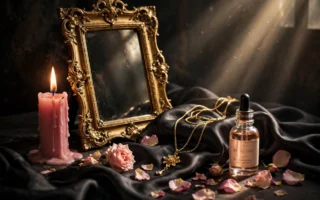
Every face in this series — every portrait, every recreation, every kept and unkept face — descends from faces that were made up by candlelight, because for most of human history there was no other light to make them by. Candlelight is not a filter applied to the face. It is the light the face was designed in: warm, moving, forgiving of everything except dullness. The vanity candle is therefore not atmosphere at this altar. It is the working lamp — the light under which the color is chosen, the jar is fed, the petition is spoken to the glass. Half the pieces in this series happen, literally, by candlelight.
One plain sentence, outside the register, because this altar loves its readers: a burning candle is fire — keep it on a steady surface, away from cloth and curtains, and never leave it alone in a room. The ancestors kept their houses standing while they kept their flames. Do both.
The Slowest Sentence
Dress it. Name it. Burn it in sittings. Read it honestly.
The candle is the slowest sentence at the altar — a petition spoken at the speed of melting wax, in a language of oil and flame and return. It does not hurry, and it cannot be hurried, and when it finishes, it has finished completely: nothing left of the saying but light that was spent and a worker who stayed for all of it.
That is the whole technology. It has been enough for a very long time.
Name it by this altar’s taxonomy, last, so the naming is not missed: candle work is foundational work — the craft beneath the workings, neither glamour nor beauty magic nor vanity in itself. The dressed candle takes its name from the petition it carries: a candle dressed for fascination works glamour’s errand, a candle dressed for devotion burns beauty magic’s, and the flame at the vanity, lit so the face can be made in its light, serves whichever work the sitting is for. The candle is the sentence. What the sentence says decides what the work is called.
Glamour is yours to conjure. — Lakish
From the Altar’s Bookshelf
- Zora Neale Hurston, Mules and Men (1935)
- Katrina Hazzard-Donald, Mojo Workin’: The Old African American Hoodoo System (2013)
As an Amazon Associate, Blaq Vixen Beauty earns from qualifying purchases.