This post contains affiliate links. If you buy through them, Blaq Vixen Beauty may earn a small commission at no extra cost to you.
This altar runs on a reciprocal economy, and it is worth stating before the monster enters, because the monster is defined by breaking it.
The dead of this house are fed — with remembrance, with water, with their names said aloud — and they feed their descendants in return: with counsel, with covering, with the inherited force this series keeps consulting. Nothing at this altar is taken without an offering moving the other way. So the house order first, as always: consult your benevolent ancestors first. They are the first authority, before any root, any book, any fascination.
Now the monster — because the culture’s great glamour-monster is precisely the figure who takes and never offers, and his beauty is the point of him.
The Literary Record
The modern vampire is born glamorous. John Polidori’s The Vampyre (1819) gives us Lord Ruthven — beautiful, aristocratic, fascinating, and ruinous to everyone who comes near him; the tale grew out of the same ghost-story contest that produced Frankenstein, and its monster is not a corpse in a cape. He is a presence. Rooms turn toward him. That is the horror of him.
Sheridan Le Fanu’s Carmilla (1872) refines the figure into beauty itself as the approach of the drain: the lovely girl-guest whose fascination deepens as her hostess sickens, the glamour and the wasting arriving in the same carriage. And Bram Stoker’s Dracula (1897) completes the doctrine — the count who grows young on what he takes, his portrait in the castle showing a vigorous man because the vigor is, quite literally, other people’s.
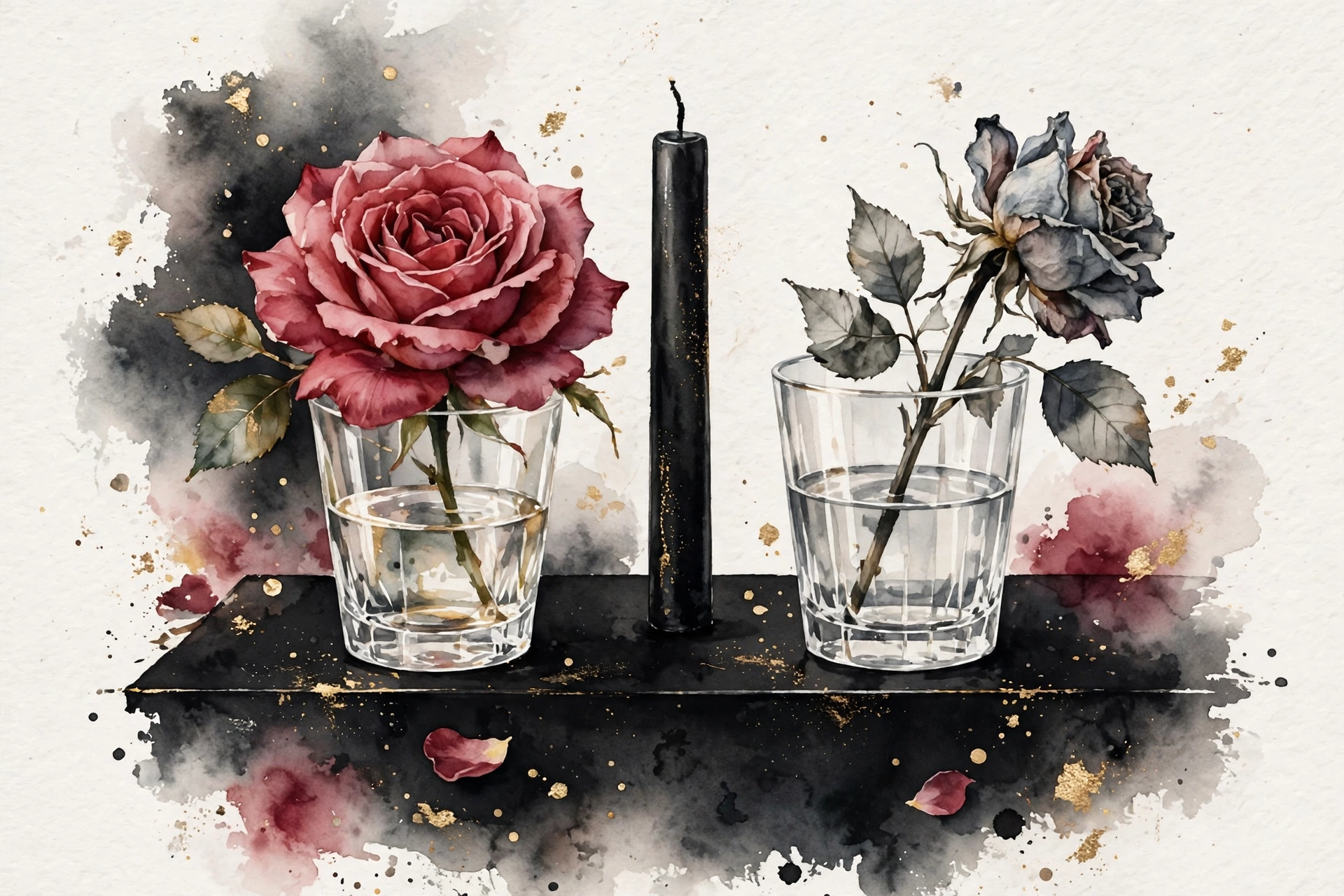
Read as cultural evidence, the nineteenth century’s glamour-monster is exact about what the age feared fascination could become: presence without generation. Beauty that does not age because someone else is paying its bill. A face sustained by a hidden invoice, sent nightly to everyone around it.
The Modern Discourse
The twentieth century moved the figure out of the castle.
Dion Fortune’s Psychic Self-Defense (1930), a sober manual of the British occult revival, discusses psychic parasitism in plain terms — the person who, depleted in themselves, draws vitality from the people around them. From there the vocabulary spreads through the century’s occult and then popular literature: the psychic vampire, the energy vampire, figures now of the office and the friendship as much as the tomb. This piece reports that discourse as discourse — a modern literature, labeled modern — and not as a diagnosis to be pointed at anyone. The value of the vocabulary is not accusation. It is recognition: the pattern the novelists drew in capes, the occultists redrew in ordinary clothes.
The Examination
Because the pattern does wear ordinary clothes, and the vanity is where it can be examined honestly.
The vampiric glamour in ordinary dress is not fangs. It is the presence that must be fed compliments on a schedule to stay lit — and goes cold, then cruel, when the feeding lapses. It is beauty maintained by keeping the surrounding faces diminished: the friend group with one sun and several managed shadows. It is the room that leaves every gathering a little drained and calls the draining charisma. The record — novelists and occultists agreeing across a century — describes the same economy each time: the glow is real, and it is invoiced.
No reader is diagnosed here, and no living person is named. The examination is offered the way this altar offers all its examinations: as a mirror held at the pattern’s angle, for whoever recognizes their own arrangements in it — including, on honest nights, the woman holding the mirror.
The Refusal
Against the counterfeit, this altar states its economy plainly, because the refusal is the piece’s whole purpose.
Power here is raised — generated in the body and the gathered room, as the record of breath and song teaches; it is not siphoned. Magnetism here is kept — built by discipline and answered for like money; it is not harvested off other people’s attention. Regard here is generated at home — the jar fed, the bath drawn, the appointment at the mirror kept — so that the worker arrives in the world already supplied, and her presence is an offering laid on the room rather than a bill presented to it.
A glamour that requires a victim is not a stronger glamour. It is an unpaid bill with excellent lighting. And the record’s monsters share one more trait, across every telling: the dawn always comes. The fed-upon face is the borrowed glamour’s final form — and this house does not borrow, and it does not feed.
The Kept Rose
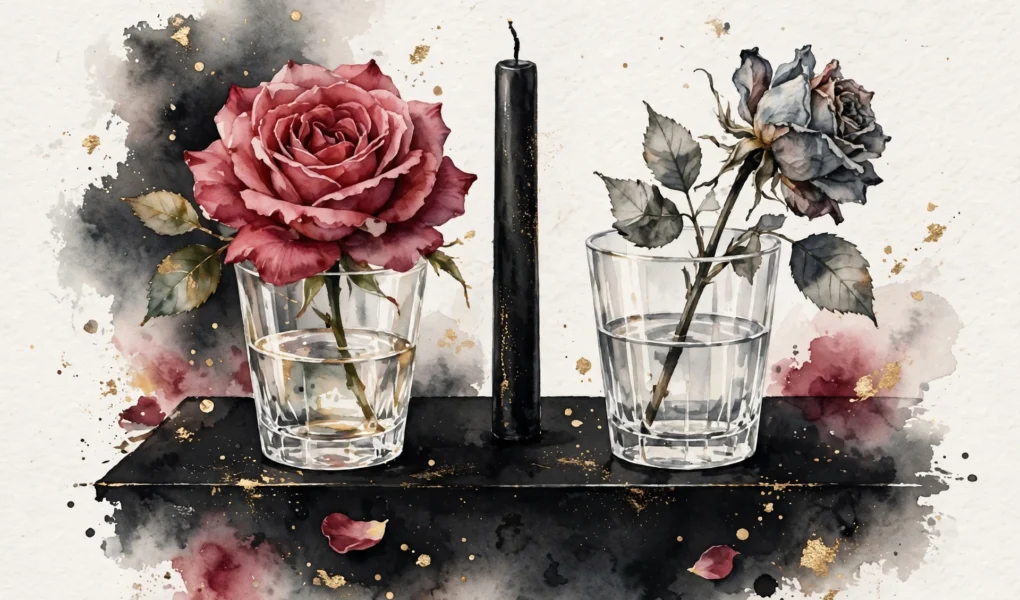
The kept face — generated, tended, one’s own — needs no one’s diminishment to shine. It blooms on its own stem, fed by its own roots, in its own season, and it can afford what the vampire never can: to be left alone in a room, unfed by any gaze, and lose nothing.
That is the altar’s whole doctrine in one flower. Generate. Keep. Offer.
Feed no one to the face — not even, in the end, yourself.
Glamour is yours to conjure. — Lakish
From the Altar’s Bookshelf
- John Polidori, The Vampyre (1819)
- Sheridan Le Fanu, Carmilla (1872)
- Bram Stoker, Dracula (1897)
- Dion Fortune, Psychic Self-Defense (1930)
As an Amazon Associate, Blaq Vixen Beauty earns from qualifying purchases.